


 Agriculture
  Manufacturing
 Automobile
 Pharmaceutical
 RealEstate
 Education
 Events
 Industry 4.0
 Lab Setup
 Training
 Product Demonstrator
 Remote Assistance (MR)
 Virtual Showroom
 Virtual Try on
 Print Media
  Virtual Reality

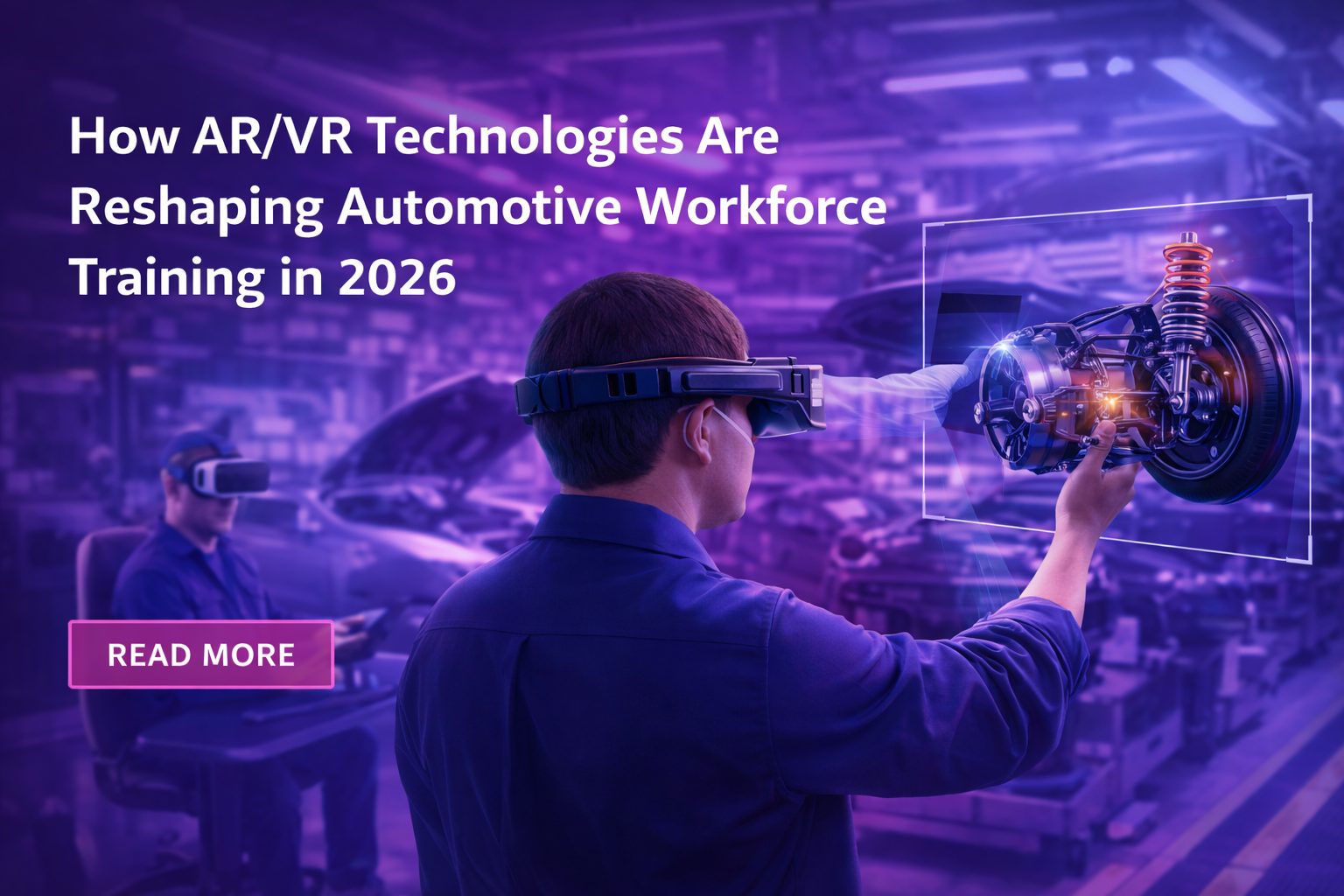
The automotive industry in 2026 is witnessing a major shift driven by electric mobility, autonomous technologies, software-defined vehicles (SDVs), and advanced manufacturing automation. With vehicles becoming more complex and production lines more digitized, automotive companies now require a workforce that is faster to train, safer on the floor, and highly adaptable to new technologies.
This need is pushing organizations to adopt Augmented Reality (AR) and Virtual Reality (VR) as core components of their workforce training strategy.
Why AR/VR Adoption Is Accelerating in Automotive Training
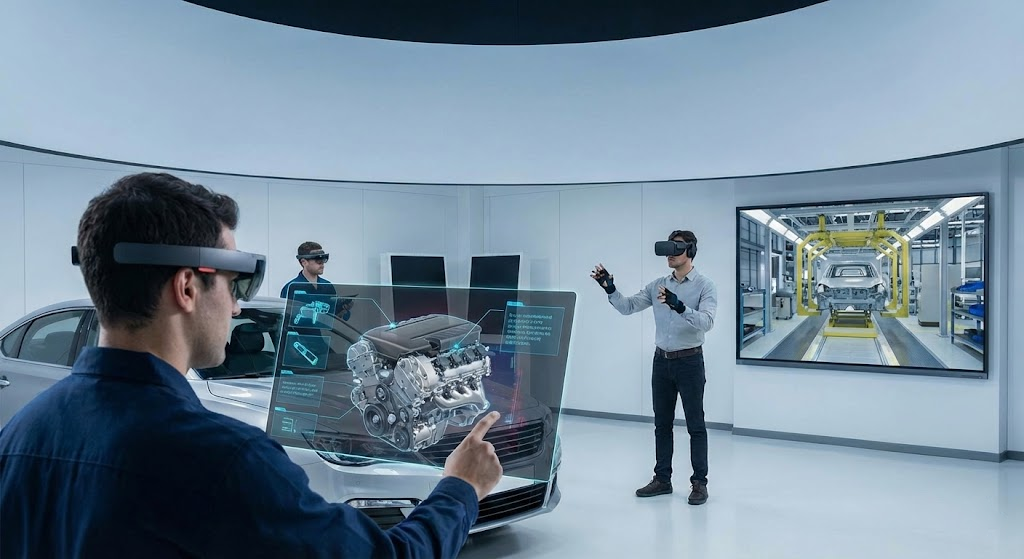
In 2026, automotive leaders are prioritizing immersive technologies because traditional training cannot keep up with:
- Rapid EV component upgrades
- New ADAS and autonomous modules
- Smart factory operations
- Digital twin–based workflows
- Maintenance of high-tech equipment
AR/VR bridges the gap by providing:
- Hands-on simulation
- Guided workflows
- Faster knowledge transfer
- Standardized global learning
- Zero-risk training environments
Companies working with Industry 4.0 and XR solution providers like Yeppar are integrating these tools deeply into their manufacturing and service training ecosystems.
How AR/VR Is Strengthening Automotive Workforce Capabilities in 2026
1.AR-Enabled Assembly Training for Next-Gen Manufacturing Lines
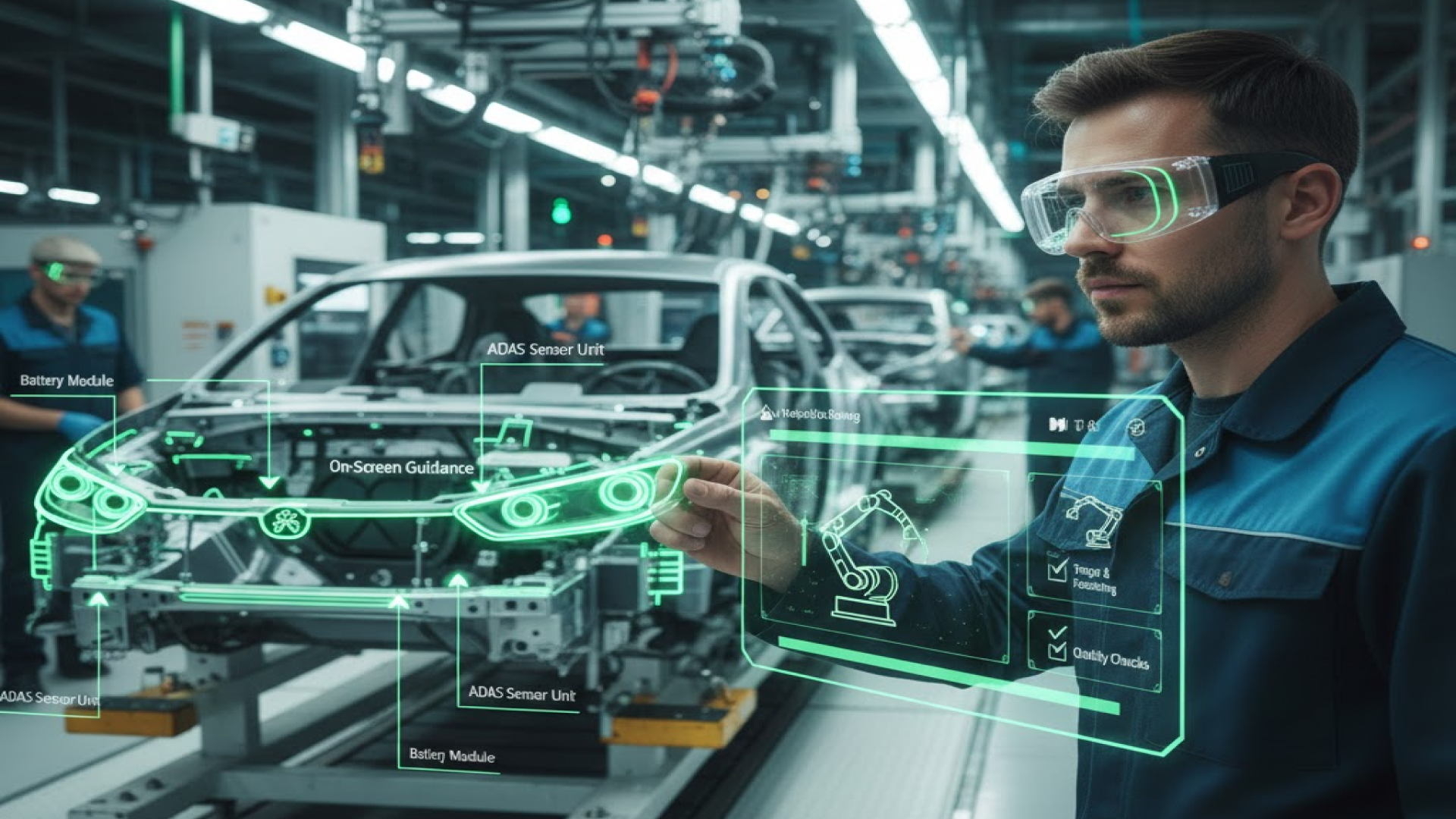
Automotive plants in 2026 rely heavily on automation, precision assembly, and robotic collaboration.
AR workflows help workers:
- Learn assembly steps with on-screen guidance
- Identify components accurately
- Follow torque and fastening instructions
- Perform real-time quality checks
AR instructions reduce confusion and make onboarding much smoother for new technicians.
2. VR Simulation Labs for Skilled Mechanic & Technician Training
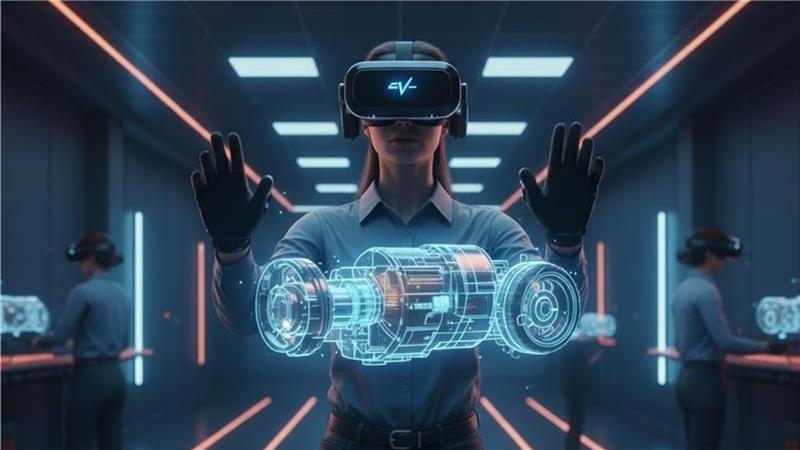
VR training labs have become a standard part of technical upskilling programs in 2026.
Technicians can now:
- Work on virtual EV powertrains
- Practice ADAS and sensor calibration
- Understand SDV hardware-software architecture
- Run diagnostic workflows
- Perform virtual repairs without downtime
This removes the need for physical components during early-stage learning.
3. Safety Training Through High-Fidelity VR Scenarios
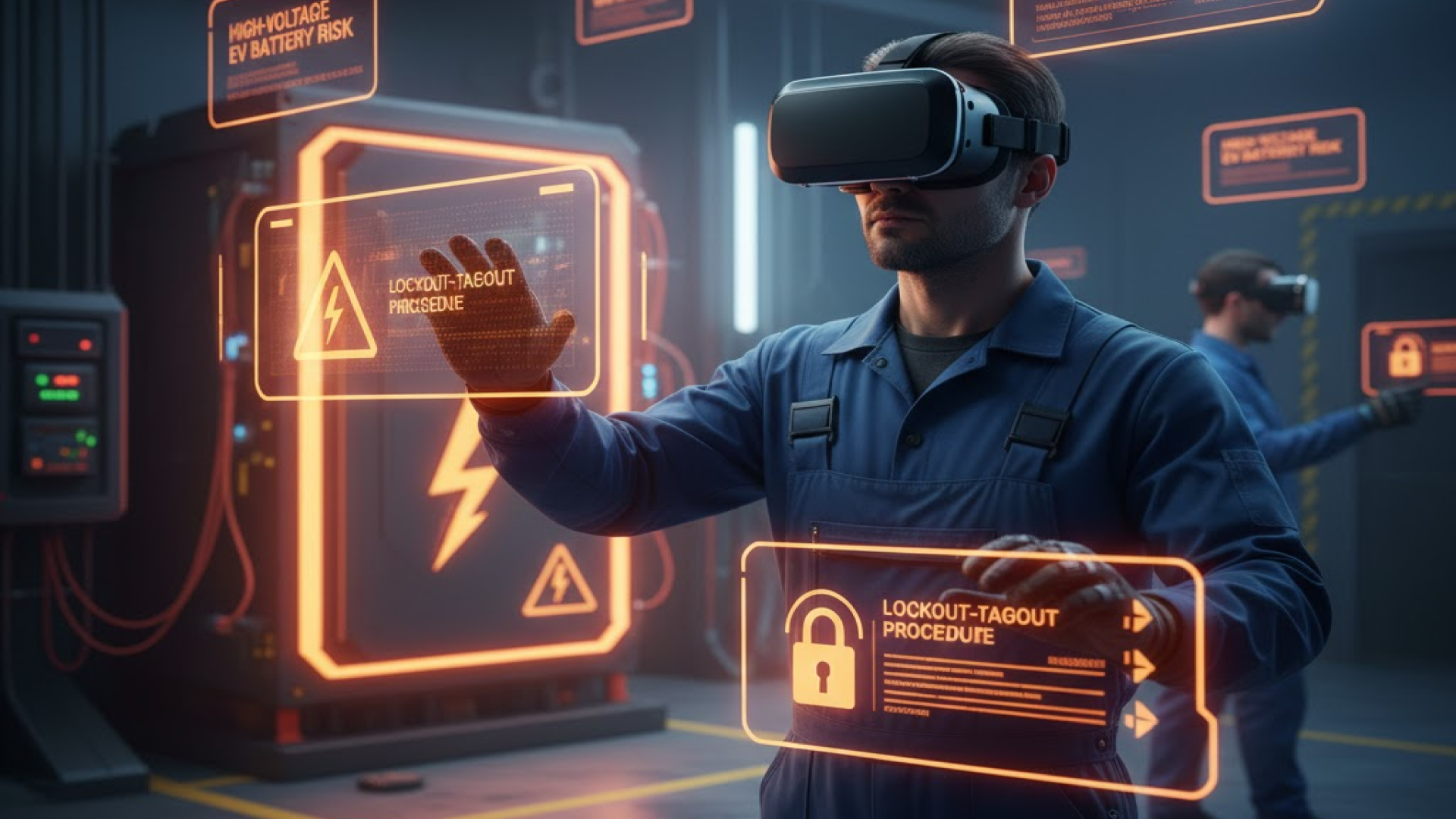
Safety standards in automotive factories have become more stringent in 2026.
VR enables workers to:
- Experience hazardous environments virtually
- Practice emergency protocols
- Understand high-voltage EV battery risks
- Perform lockout-tagout procedures
This keeps the workforce prepared while maintaining operational safety.
4. AR Remote Assistance for Quick Troubleshooting
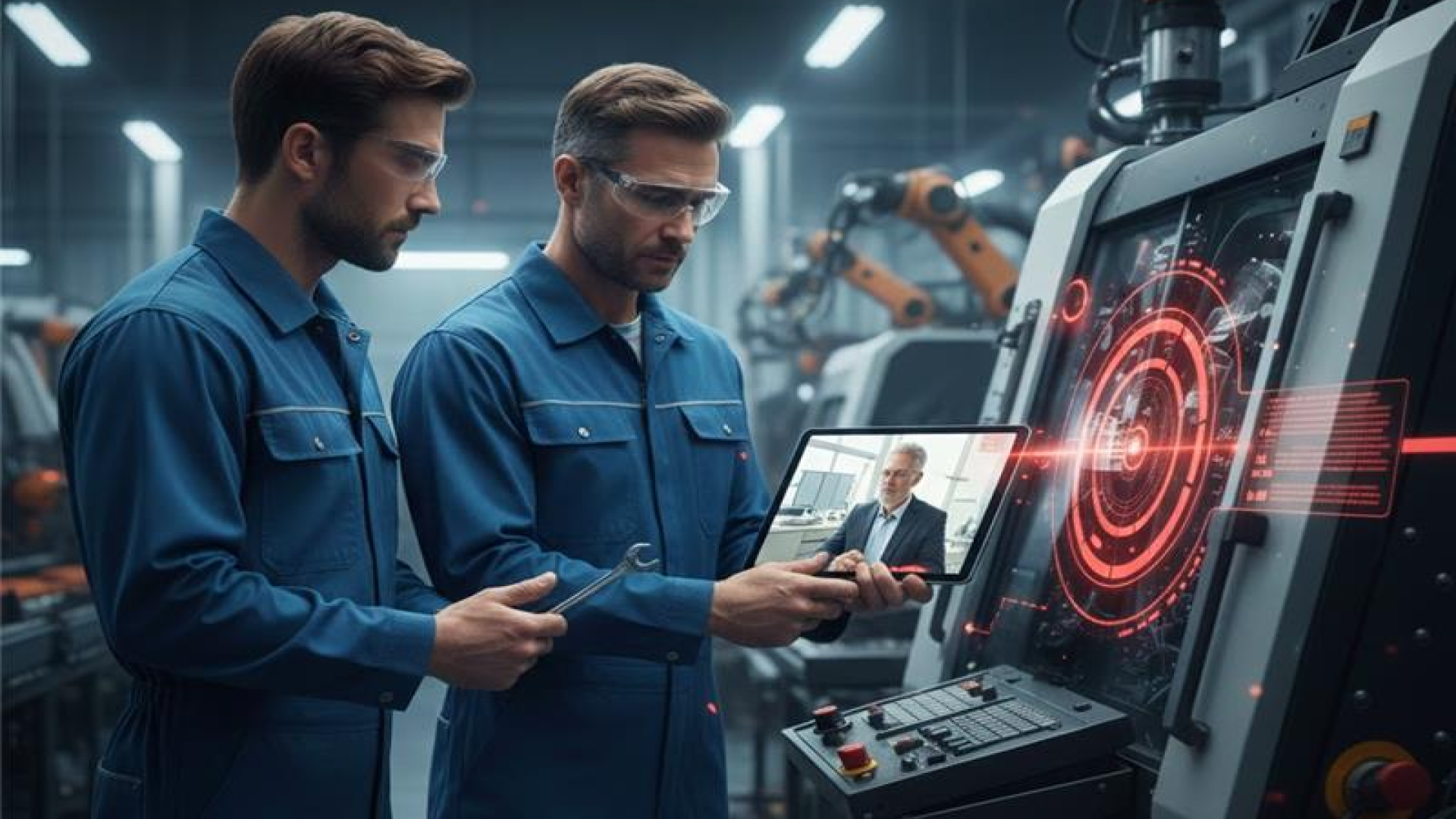
Field service engineers and plant technicians now use AR devices for:
- Live expert guidance
- Digital annotations on real-world equipment
- Remote equipment diagnostics
- Faster issue resolution
This minimizes machine downtime and enhances productivity.
EV Manufacturing Training Powered by AR/VR
As EV production scales globally, AR/VR is helping bridge skill shortages related to:
- Battery module assembly
- Battery protection systems
- High-voltage safety
- Thermal management
- Power electronics
- Charging infrastructure support
Immersive learning accelerates workforce readiness for rapidly evolving EV technologies.
Key Advantages for Automotive OEMs & Service Networks
In 2026, automotive companies adopting AR/VR are experiencing improvements such as:
- Faster workforce training cycles
- Reduced operational disruptions
- More accurate task execution
- Higher retention of complex processes
- Standardized learning across plants
These benefits help companies stay competitive in a time where efficiency and adaptability directly affect market leadership.
The Road Ahead: AR/VR as Core to Automotive Talent Development
By 2026, AR, VR, AI, and digital twins are merging into unified training ecosystems.
This integration will shape the future of automotive learning through:
- Intelligent learning paths
- Predictive skill assessments
- Real-time performance insights
- Adaptive simulation environments
With innovators like Yeppar enabling scalable XR and Industry 4.0 integrations, automotive companies can build highly capable and future-ready teams.
Conclusion
As the automotive world evolves towards software-driven vehicles, electrification, and intelligent manufacturing, immersive training is becoming essential—not optional.
AR and VR are empowering organizations to build a skilled, confident, and safety-conscious workforce ready for the challenges of 2026 and beyond.

 Contact Us