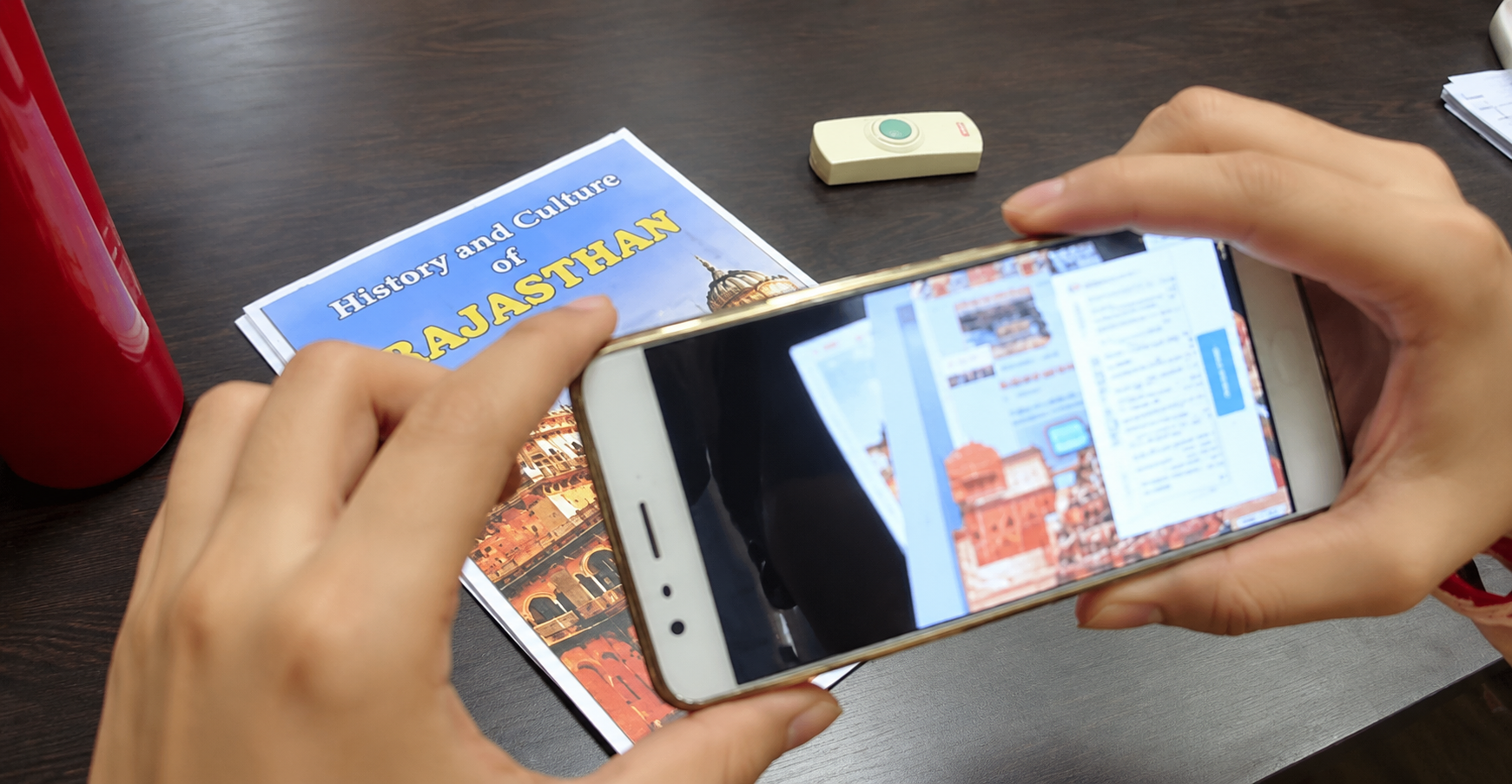
Make Learning More Immersive with AR and VR

AR/VR Solutions for Education and Immersive Learning

Help learners explore complex concepts through interactive, visual and experiential learning. Yeppar develops Augmented Reality (AR), Virtual Reality (VR) and Mixed Reality (MR) experiences that can support classroom learning, practical skill development, virtual demonstrations and instructor-led training.

From 3D visualisations to simulated environments, immersive learning experiences can help educational institutions and training providers make selected topics more engaging and easier to demonstrate.

Immersive Solutions for Education

Explore immersive technology applications that can be scoped around curriculum objectives, learner needs, available devices and teaching environments.

No solutions in this category yet.

Education Use Cases

  • Science and engineering concept visualisation

  • Virtual demonstrations and selected lab simulations

  • Technical and vocational skills training

  • Equipment and component familiarisation

  • Safety and procedure-based learning

  • Instructor-led immersive lessons

  • Interactive 3D content for complex topics

  • Repeatable practice for selected learning activities

AI, AR/VR and the Future of Learning

AI can complement immersive learning when the use case, educational content, data handling and technical integration support it. AR, VR and MR can provide the interactive environment, while an AI-enabled component may support selected learning interactions or content workflows. The appropriate capabilities should be defined around educational objectives and validated before being presented as available features.

AI-Assisted Learning Support

Where implemented, AI-enabled features may help learners navigate approved learning content, receive contextual explanations or practise selected concepts. The quality and scope of responses depend on the underlying content, configuration and safeguards.

Adaptive Learning Activities

A learning experience may be designed to vary selected prompts, hints or difficulty levels based on defined rules and learner progress. This should only be described as adaptive or personalised learning when the feature is actually implemented in the product.

Interactive 3D and Virtual Environments

AR/VR experiences can make selected subjects easier to explore by allowing learners to interact with 3D models, visualise processes and practise defined tasks in a virtual setting.

Benefits of Immersive Learning

  • Make abstract or complex concepts easier to visualise.

  • Give learners an interactive way to explore selected topics.

  • Support repeatable practice in suitable simulated environments.

  • Provide additional ways to demonstrate equipment, systems and processes.

  • Adapt content to the subject, learner group and learning objectives.

  • Complement classroom teaching, practical activities and instructor-led training.

Our Solution Development Process

  1. Understand the Learning Objectives

    Discuss the subject, learner age group, curriculum or skills requirement, teaching approach and available devices.

  2. Design the Learning Experience

    Plan the content, 3D assets, interactions, scenarios and assessment approach appropriate to the agreed objectives.

  3. Develop and Validate

    Build the agreed AR/VR/MR experience and review it with stakeholders to ensure it aligns with the learning requirements.

  4. Deploy and Support

    Prepare the experience for the agreed devices and delivery environment, with support as defined in the project scope.

Frequently Asked Questions

They can support 3D concept visualisation, virtual demonstrations, selected lab simulations, technical training and experiential learning activities.

Yes. Content can be scoped around the subject, learning objectives, learner group, available devices and teaching environment.

Not in every case. Virtual simulations can complement practical education and provide repeatable practice for selected activities, while hands-on laboratory work may still be necessary.

AI-enabled functions may be considered where the educational use case, content and technical requirements support them. Specific capabilities should be confirmed during solution design.

Device compatibility depends on the developed experience and deployment requirements. Supported devices should be confirmed during project planning.

Assessment or progress-tracking features may be included where supported by the configured experience and agreed evaluation framework.
Let’s Get Started

Bring Immersive Learning to Your Institution

Looking to make selected subjects more interactive or provide learners with additional opportunities to explore and practise? Talk to Yeppar about an AR, VR or MR experience designed around your educational objectives.