

 Agriculture
  Manufacturing
 Automobile
 Pharmaceutical
 RealEstate
 Education
 Events
 Industry 4.0
 Lab Setup
 Training
 Product Demonstrator
 Remote Assistance (MR)
 Virtual Showroom
 Virtual Try on
 Print Media
  Virtual Reality

Introduction
Pharmaceutical manufacturing processes rely on clearly defined Standard Operating Procedures (SOPs) to maintain consistency across operations. These SOPs are typically documented in text-based formats that require interpretation during task execution.
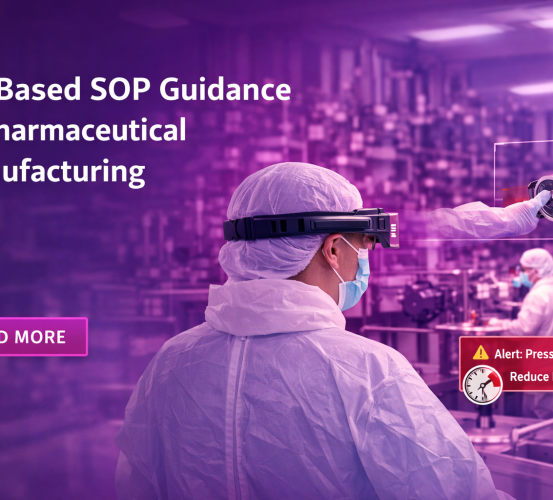
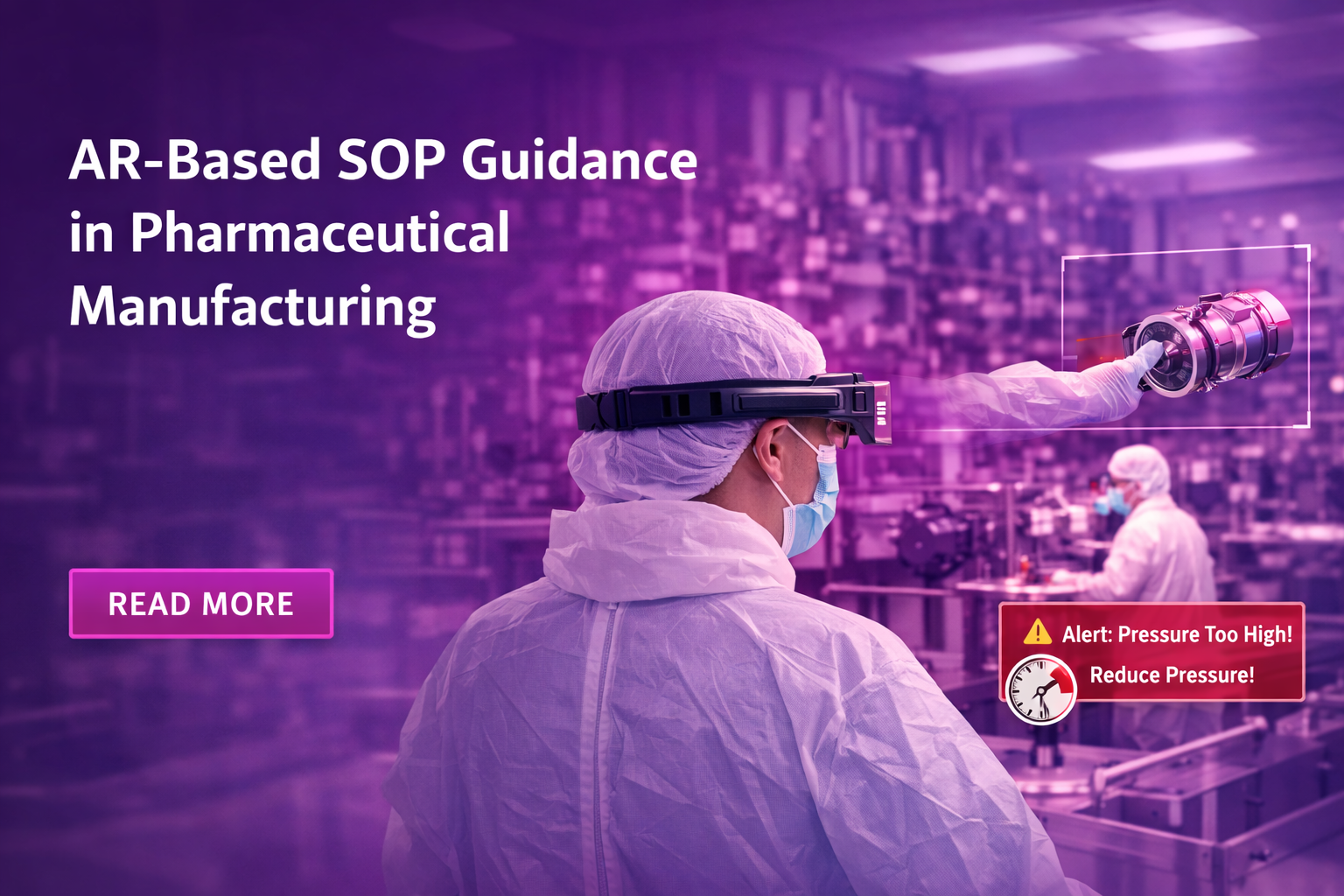
In practical environments such as production floors or cleanrooms, accessing and interpreting written SOPs alongside physical equipment can be challenging. Augmented Reality (AR) offers a visual approach to presenting SOP-related information directly within the operator’s field of view, supporting better contextual understanding without modifying the underlying procedure.
Understanding the SOP Execution Challenge
SOPs are designed to be comprehensive, but their execution often depends on how effectively information is accessed during real tasks.
Common challenges include:
- Switching between documentation and equipment
- Interpreting text instructions for physical components
- Variations in understanding across experience levels
- Limited use of paper-based materials in controlled environments
These challenges are related to information delivery, not process design. This is where AR VR solutions in pharma are being explored as a supportive visualization layer.
How AR-Based SOP Guidance Is Applied
AR-based SOP guidance involves overlaying digital instructions onto real-world equipment using devices such as tablets or smart glasses. The displayed content aligns with existing SOP documentation and follows predefined sequences.
Typical elements shown through AR include:
- Step-by-step procedural instructions
- Highlighted equipment parts or zones
- Reference visuals and diagrams
- Task confirmation prompts
The operator continues working in the real environment while receiving contextual guidance.
Practical Applications in Manufacturing Settings
Equipment Setup and Changeover
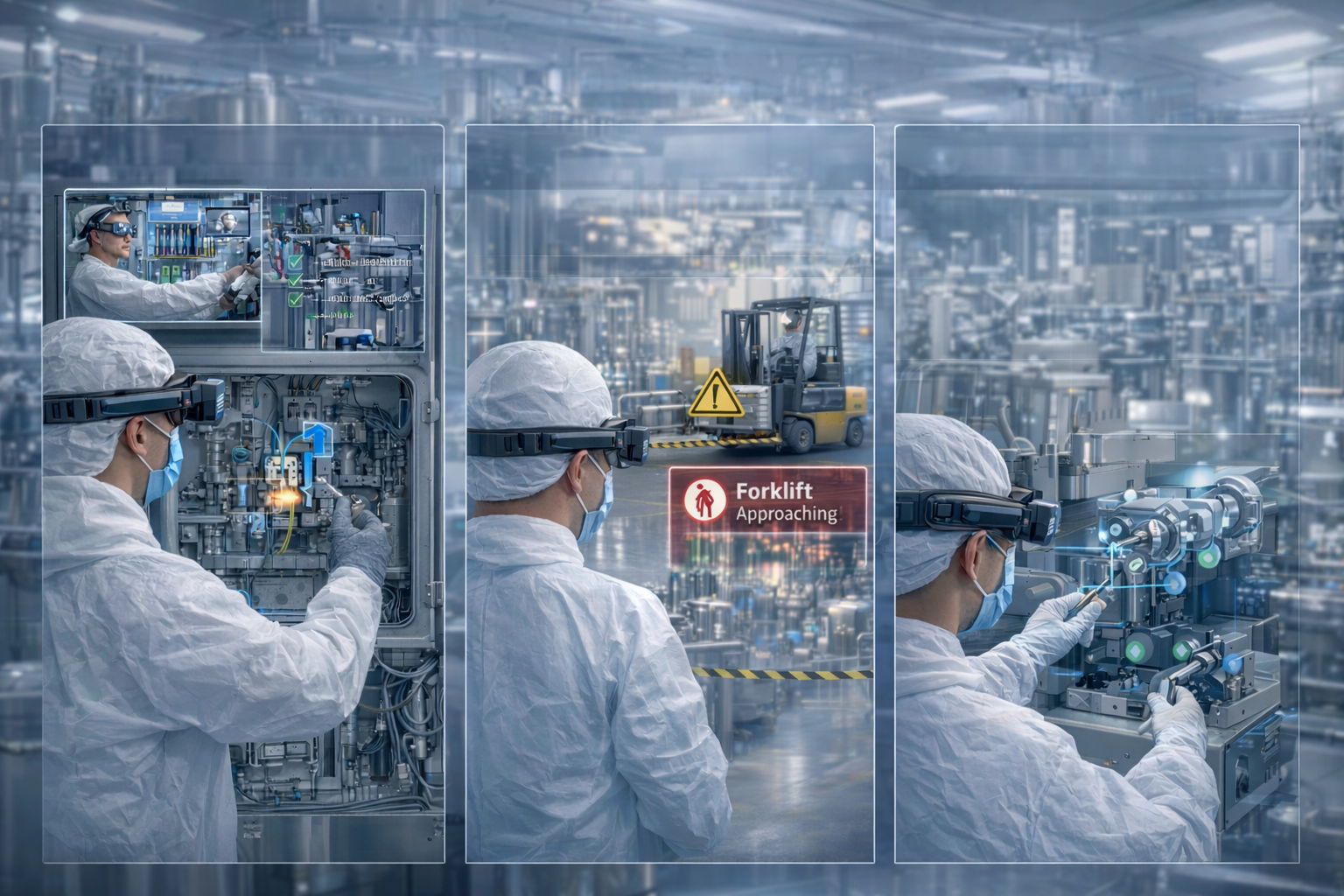
During setup or changeover activities, AR can visually indicate the sequence of actions and component positioning as defined in SOPs.
Process Execution Support
While performing routine tasks, operators can view SOP steps contextually, helping them stay aligned with documented procedures.
Inspection Preparation
AR visuals can point out inspection-related checkpoints, supporting preparation activities before formal review processes.
These use cases fit naturally within broader immersive technologies for the pharmaceutical industry, where visualization supports understanding.
Supporting Consistency Without Process Change
AR does not replace SOPs, automation systems, or compliance frameworks. Instead, it presents the same approved information in a visual format. This helps reduce interpretation gaps while keeping existing processes intact.
Because the SOP content itself remains unchanged, AR acts as an interface rather than a control mechanism.
Conclusion
AR-based SOP guidance provides pharmaceutical manufacturing teams with an alternative way to access procedural information. By presenting SOP steps visually within the working environment, AR supports clearer interpretation and consistent execution.
As part of advanced visualization technologies used in pharmaceutical environments, AR serves as a practical support tool that complements established manufacturing practices without introducing procedural changes.
FAQs
What is AR-based SOP guidance in pharmaceutical manufacturing?
It is a method of visually presenting SOP steps using augmented reality overlays aligned with existing documentation.
Does AR change approved SOPs?
No. AR displays the same SOP information in a visual format without altering the procedure.
Where can AR-based SOP guidance be used?
It can be applied in manufacturing areas, equipment setup zones, and inspection preparation workflows.

 Contact Us