

 Agriculture
  Manufacturing
 Automobile
 Pharmaceutical
 RealEstate
 Education
 Events
 Industry 4.0
 Lab Setup
 Training
 Product Demonstrator
 Remote Assistance (MR)
 Virtual Showroom
 Virtual Try on
 Print Media
  Virtual Reality

Introduction
Bengaluru has established itself as one of India’s leading technology and engineering hubs, with a strong presence across aerospace, defence, automotive, manufacturing, engineering services, and advanced technology sectors.
As these industries continue to adopt modern equipment, complex systems, and digital workflows, workforce training has become a critical requirement. Engineers, technicians, operators, and maintenance teams need practical understanding of processes, equipment, and operational environments before applying their skills in real-world scenarios.
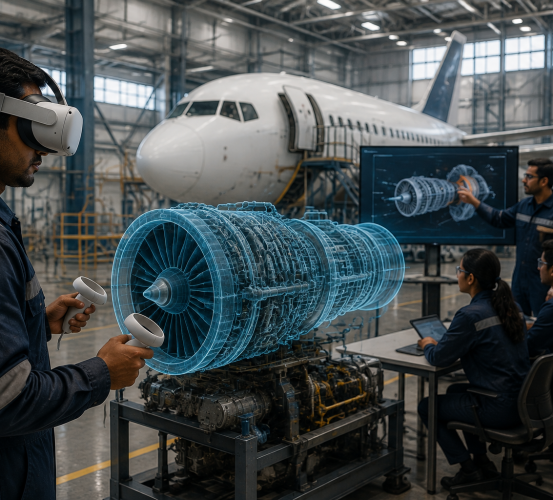
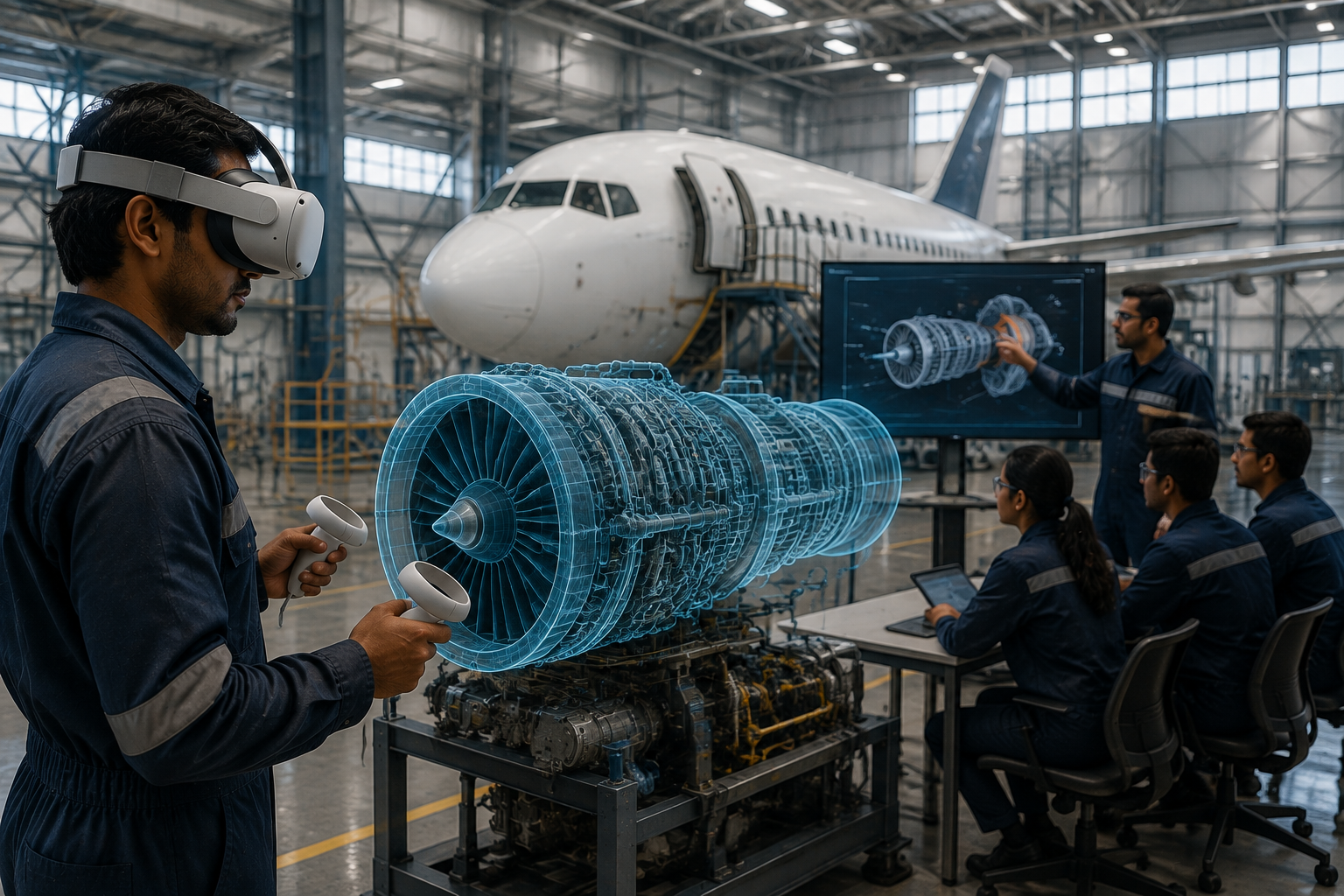
Traditional classroom learning, technical documentation, and hands-on demonstrations continue to play an important role. However, organizations are increasingly exploring AR VR training solutions Bengaluru to create more interactive, visual, and simulation-based learning experiences.
Immersive technologies allow enterprises to provide employees with realistic training environments where they can understand complex systems, explore equipment, and practice scenarios before entering live operational environments.
Why Aerospace and Engineering Companies Need Advanced Training Approaches
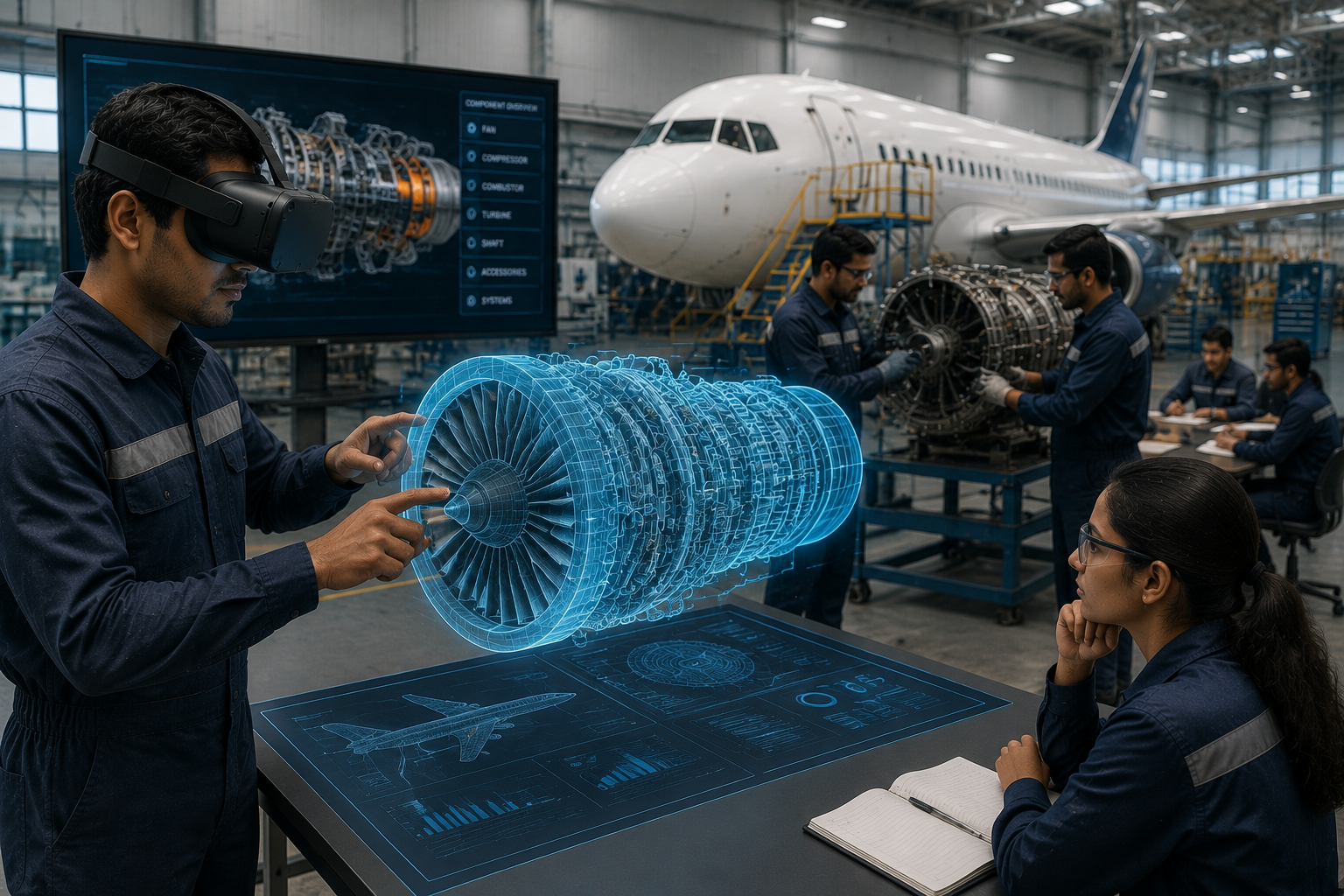
Aerospace and engineering industries involve highly specialized processes where even small gaps in understanding can affect operational efficiency, quality, and workforce readiness.
Employees often need training related to:
- Complex machinery and equipment
- Assembly processes
- Maintenance procedures
- Safety protocols
- Technical workflows
- Engineering systems
- Operational environments
One of the challenges in technical industries is that many concepts are difficult to explain only through manuals or presentations.
For example, understanding a large aerospace component, a production workflow, or a maintenance sequence can become easier when employees can visualize the environment and interact with a digital representation.
This is where immersive learning approaches can support existing training programs.
How AR and VR Are Changing Engineering Workforce Training
AR and VR create opportunities to move beyond traditional information-based learning toward experience-based learning.
Virtual Reality for Simulation-Based Training
Virtual Reality creates a fully digital environment where employees can practice selected scenarios without interacting directly with physical assets.
In aerospace and engineering environments, VR can support:
- Equipment familiarization
- Maintenance training
- Assembly process learning
- Safety simulations
- Operational scenario practice
- Facility walkthroughs
For engineers and technicians, this provides an opportunity to understand systems and workflows before performing tasks in actual environments.
Augmented Reality for Real-Time Learning Support
Augmented Reality adds digital information to the user’s physical environment.
AR can support:
- Step-by-step instructions
- Component identification
- Maintenance guidance
- Assembly support
- Process visualization
For example, a technician working with equipment can access digital guidance that helps explain components, procedures, or operational steps.
Aerospace Training Applications Using Immersive Technologies
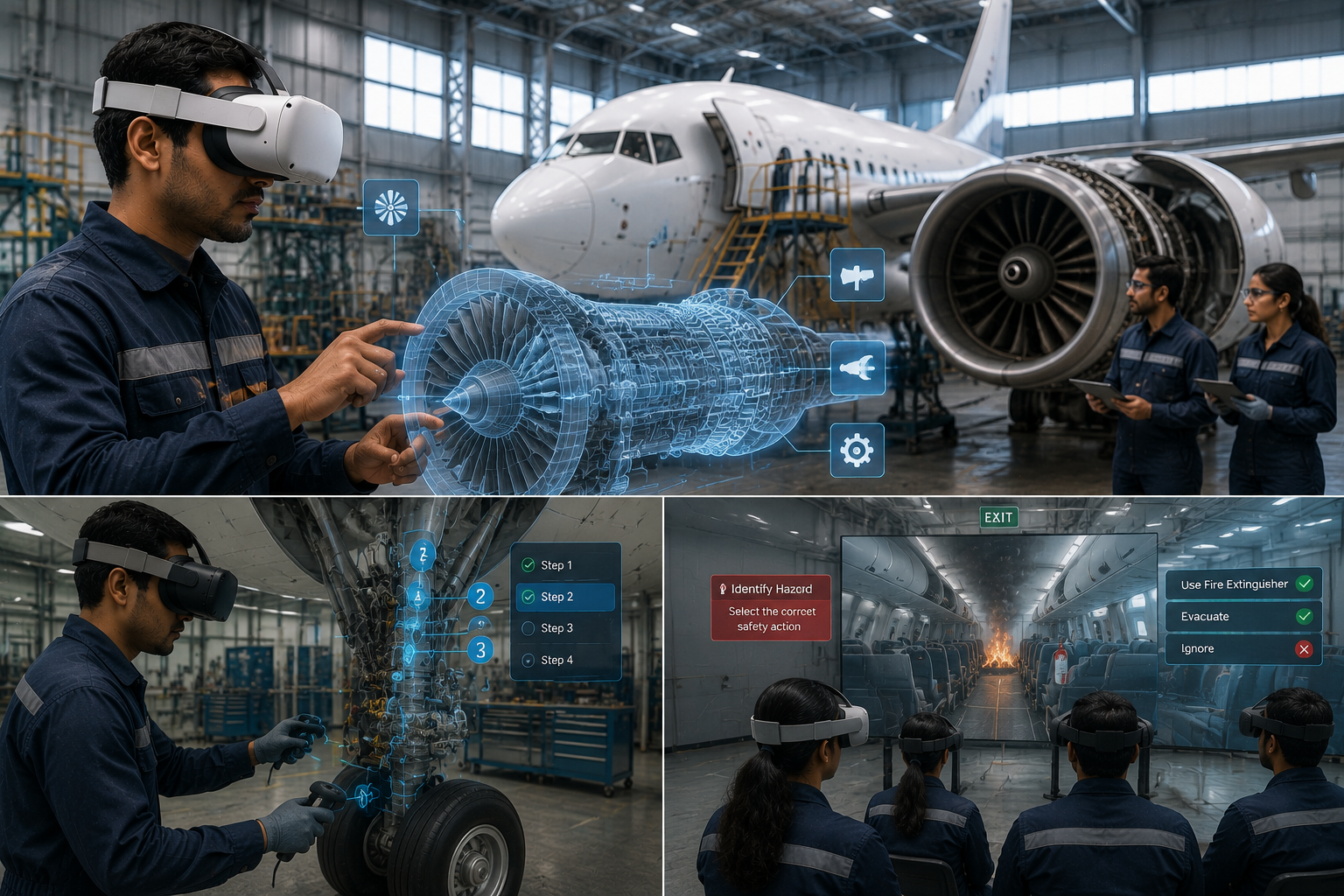
The aerospace sector requires highly skilled professionals who understand aircraft systems, components, and maintenance procedures.
Immersive training can support aerospace organizations through:
Aircraft and Component Familiarization
Employees can explore digital models of aircraft components and understand their structure, functions, and relationships.
Maintenance Learning
VR environments can help technicians understand maintenance workflows and equipment interactions before practical execution.
Safety Training
Employees can experience simulated safety scenarios and understand appropriate responses within a controlled environment.
Engineering Visualization
Complex engineering concepts can be represented visually, helping teams understand designs, systems, and operational relationships.
Engineering and Manufacturing Workforce Training Applications
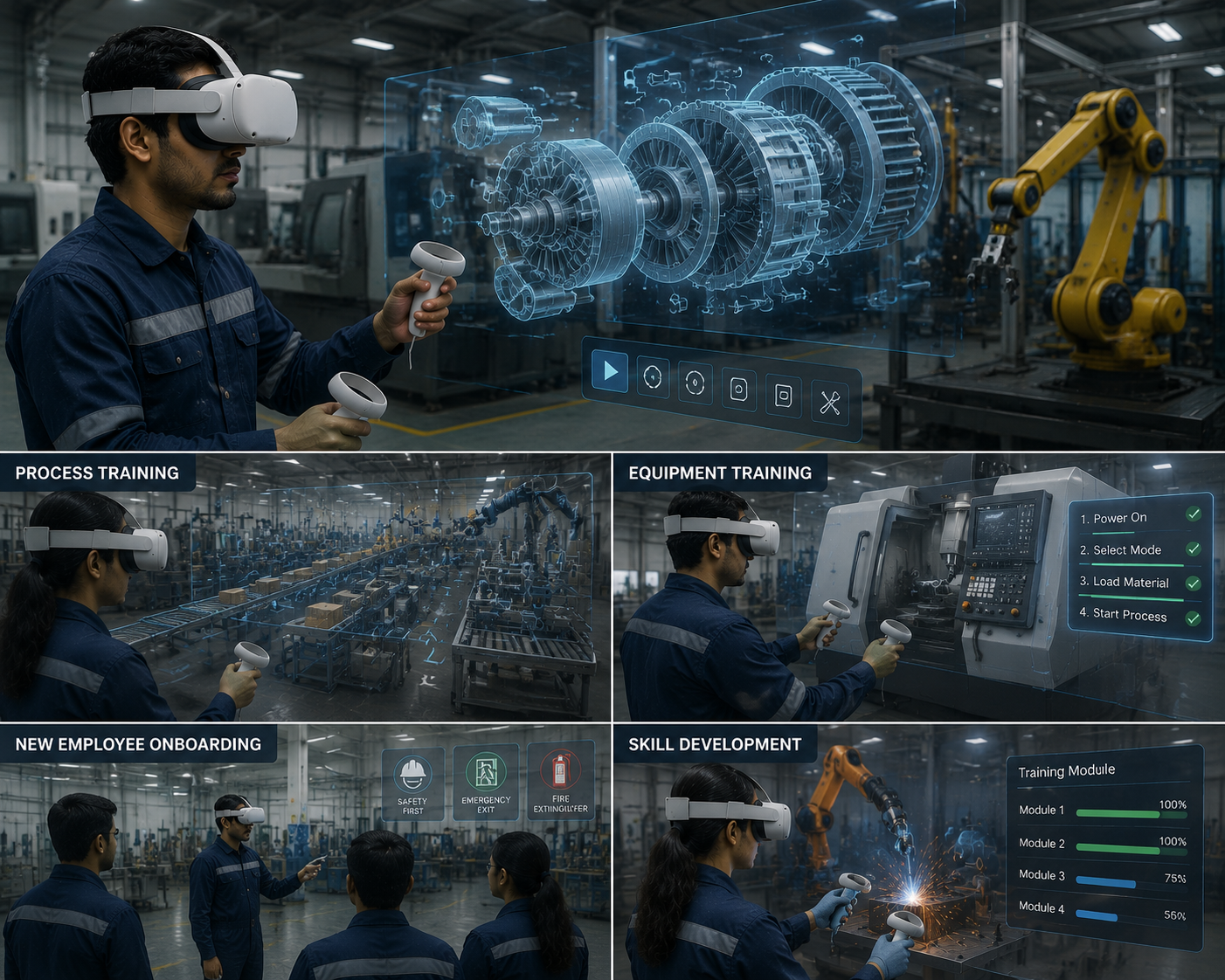
Engineering organizations often require continuous skill development as technologies, equipment, and processes evolve.
VR training solutions Bengaluru can support industries through:
Process Training
Employees can understand manufacturing or operational workflows through interactive simulations.
Equipment Training
Digital environments can introduce employees to machinery, components, and operating sequences.
New Employee Onboarding
New team members can become familiar with workplace environments before starting practical assignments.
Skill Development
Organizations can create structured learning experiences for different employee roles.
VR Simulation vs Traditional Technical Training
Traditional training methods remain valuable, but immersive technologies introduce additional learning opportunities.
| Traditional Training | Immersive Training |
|---|---|
| Text and presentations | Interactive digital experiences |
| Limited visualization | 3D environment understanding |
| Observation-based learning | Practice-based learning |
| Physical training dependency | Controlled simulation environment |
| Location-dependent sessions | Digital learning scalability |
The most effective approach is often a combination of traditional instruction, practical training, and immersive learning.
What Should Bengaluru Enterprises Consider Before Selecting an AR/VR Training Solution?
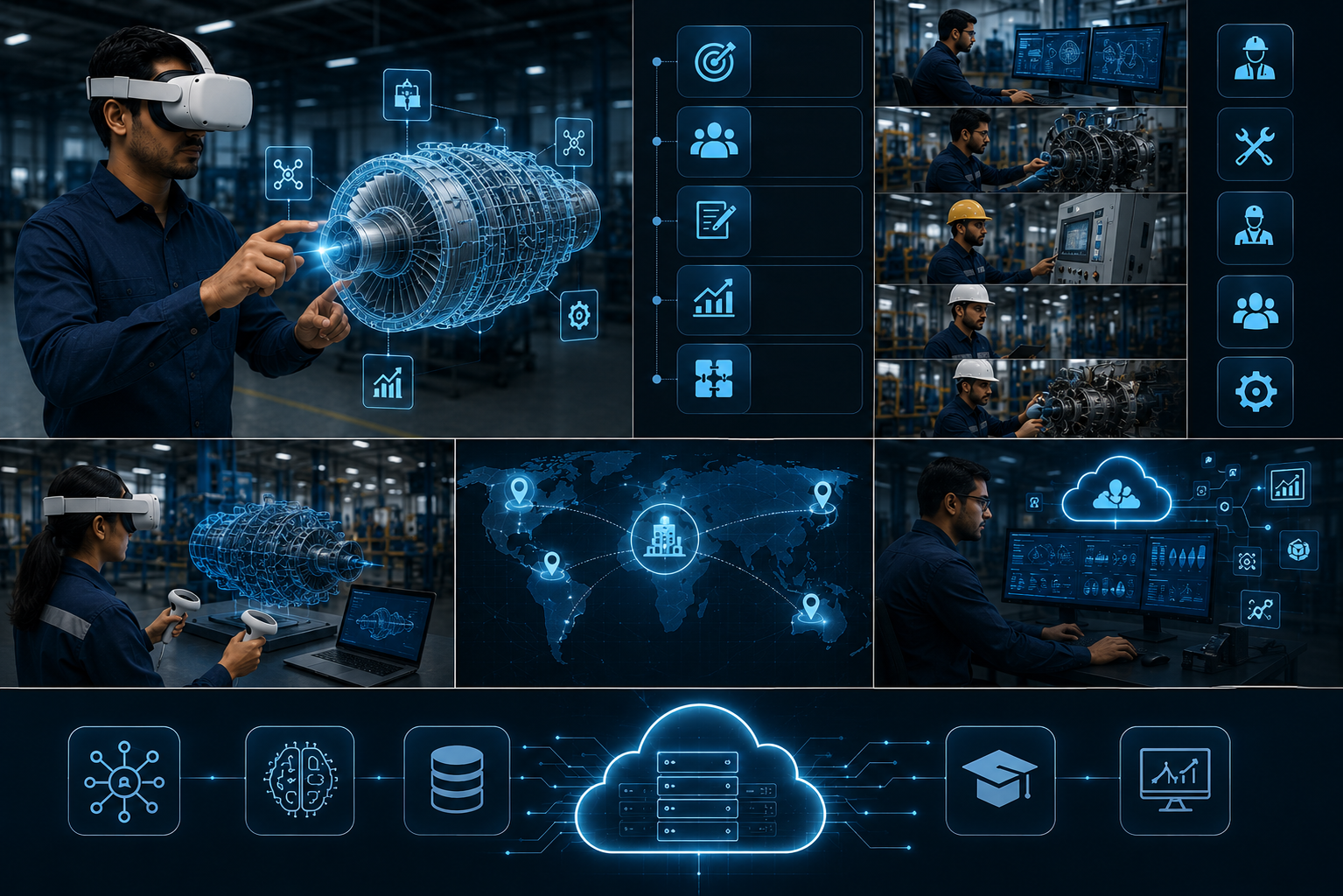
Organizations evaluating AR training solutions Bengaluru should consider several factors.
Training Objective
The first step is identifying the actual learning requirement.
Examples:
- Equipment understanding
- Safety awareness
- Technical onboarding
- Maintenance learning
- Process visualization
Workforce Requirements
Training should match the needs of:
- Engineers
- Technicians
- Operators
- Supervisors
- Maintenance teams
Content Customization
Every organization has different processes and equipment. A useful immersive training solution should reflect the actual operational environment.
Scalability
Enterprises should evaluate whether the solution can support multiple teams, locations, and future training requirements.
Integration Capability
Large organizations may also consider integration with existing digital learning platforms, operational systems, and enterprise technology environments.
Yeppar’s AR, VR, and MR solutions support customized immersive experiences and integration possibilities with technologies such as IoT, AI analytics, ERP, and LMS platforms. (yeppar.com)
How Yeppar Supports Aerospace and Engineering Training
Organizations looking for immersive training solutions Bengaluru can explore AR, VR, MR, and Digital Twin-based learning environments designed around specific workforce requirements.
Yeppar develops immersive training solutions for industries including aerospace, manufacturing, automotive, pharmaceutical, defence, energy, and other industrial sectors.
Its solutions support areas such as:
- Technical workforce training
- Equipment learning
- Safety training
- Simulation-based learning
- Digital Twin visualization
- Process understanding
Organizations evaluating immersive workforce development can Request a Free Demo to understand how AR and VR solutions can align with their training objectives.
Building the Future of Engineering Workforce Development
As aerospace and engineering industries become more technology-driven, workforce learning needs to become more adaptive and practical.
Immersive technologies provide organizations with new ways to help employees understand complex systems, visualize processes, and develop skills through interactive experiences.
For Bengaluru-based enterprises operating in advanced engineering environments, AR and VR can become valuable components of a modern workforce development strategy.
Conclusion
AR VR training solutions Bengaluru provide aerospace, engineering, and industrial organizations with an opportunity to enhance workforce learning through immersive and simulation-based experiences.
From equipment familiarization and maintenance training to engineering visualization and safety learning, AR and VR can complement traditional training methods by making complex concepts easier to understand.
Organizations adopting immersive learning should focus on their specific workforce needs and choose solutions that support practical learning, scalability, and long-term skill development.
Companies exploring advanced workforce training approaches can Request a Free Demo to evaluate how AR, VR, MR, and Digital Twin technologies can support their operational learning goals.
Frequently Asked Questions
What are AR VR training solutions Bengaluru?
AR VR training solutions Bengaluru use augmented and virtual reality technologies to create immersive learning environments for aerospace, engineering, manufacturing, and other industrial workforce training requirements.
How can aerospace companies use VR training?
Aerospace companies can use VR training for equipment familiarization, maintenance learning, safety simulations, engineering visualization, and operational scenario training.
What is the benefit of VR simulation training for engineers?
VR simulation training allows engineers to explore complex systems, understand workflows, and practice selected scenarios in a controlled digital environment.
Can AR support industrial maintenance training?
Yes. AR can provide visual guidance, digital instructions, and component information to support maintenance learning and operational understanding.
Which industries can use immersive training solutions?
Industries including aerospace, engineering, automotive, manufacturing, defence, pharmaceutical, energy, and logistics can benefit from immersive training approaches.
Can AR and VR training content be customized?
Yes. Immersive training environments can be designed according to specific equipment, workflows, employee roles, and organizational training requirements.

 Contact Us