

 Agriculture
  Manufacturing
 Automobile
 Pharmaceutical
 RealEstate
 Education
 Events
 Industry 4.0
 Lab Setup
 Training
 Product Demonstrator
 Remote Assistance (MR)
 Virtual Showroom
 Virtual Try on
 Print Media
  Virtual Reality

Introduction
Chennai is one of India’s major automotive and manufacturing hubs, with a strong presence across automobile manufacturing, engineering, component production, industrial automation, electronics, and supply chain operations.
As automotive companies continue to adopt advanced manufacturing processes, connected systems, and automated production environments, workforce skill development has become increasingly important.
Employees working on production lines, maintenance activities, quality processes, and technical operations need a clear understanding of equipment, workflows, and safety procedures before performing tasks in real environments.
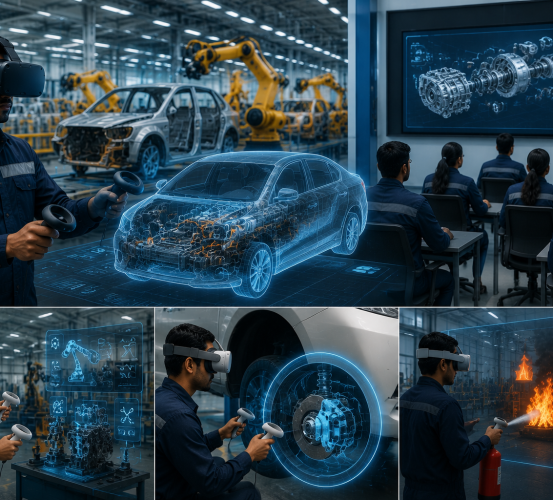
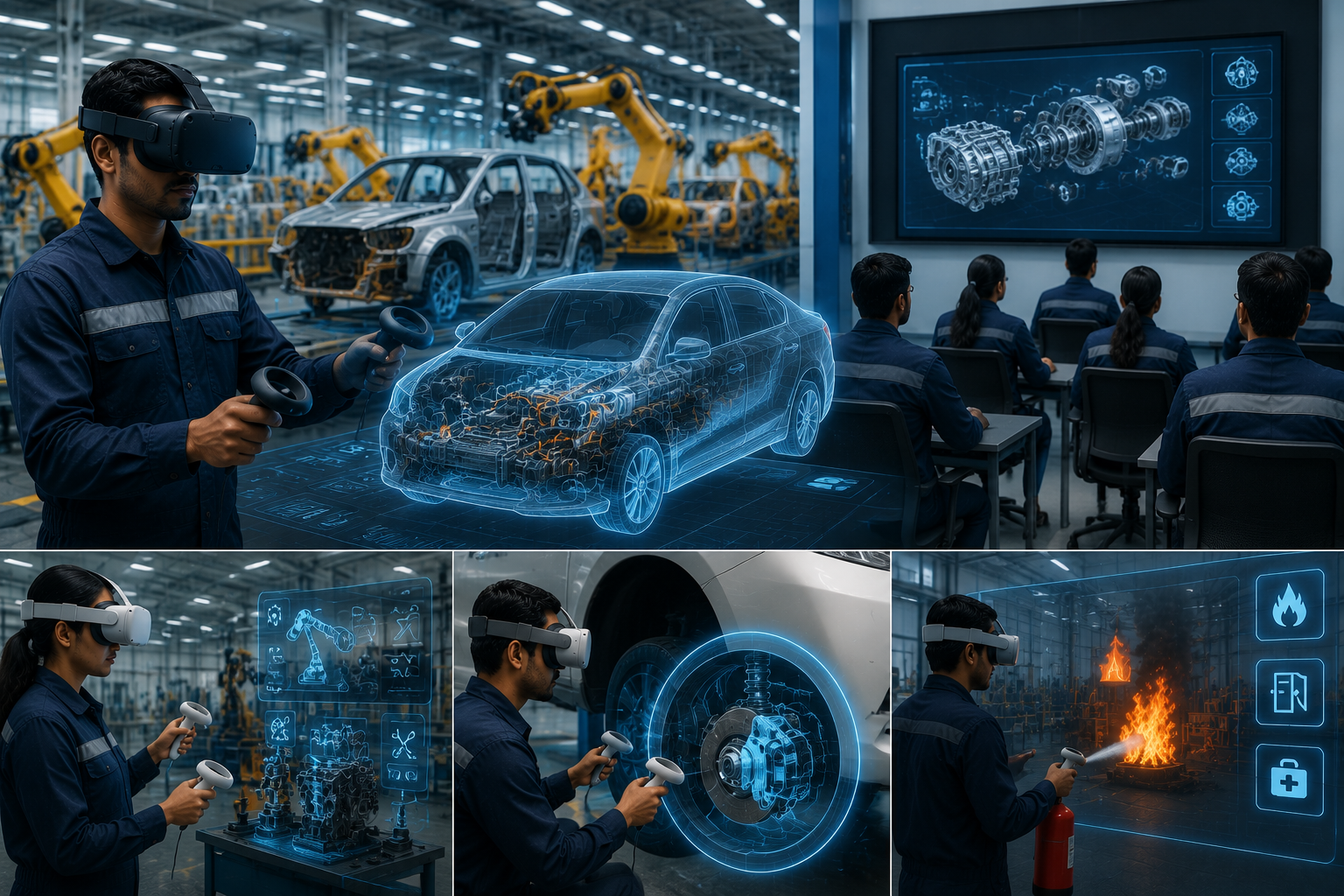
Traditional classroom training, SOP-based learning, and practical demonstrations continue to support workforce development. However, organizations are increasingly exploring AR VR training solutions Chennai to create more interactive and practical learning experiences for automotive and manufacturing teams.
Immersive technologies help organizations visualize complex processes, simulate operational scenarios, and provide employees with a deeper understanding of industrial environments.
The Changing Need for Automotive Workforce Training
Modern automotive manufacturing involves complex production systems where employees interact with machines, robotics, assembly processes, inspection systems, and quality workflows.
Workforce training challenges often include:
- Introducing employees to new equipment
- Training teams across multiple production areas
- Maintaining consistent learning standards
- Reducing dependency on expert-led demonstrations
- Preparing employees for new technologies
- Supporting continuous skill development
As production environments become more advanced, organizations require training approaches that can keep pace with operational changes.
This is where immersive learning can complement existing training frameworks.
Why Automotive Companies Are Exploring Immersive Training
Automotive manufacturing depends heavily on process accuracy, quality control, and workforce efficiency.
Many operational concepts are easier to understand when employees can visualize them.
For example:
- Understanding an assembly sequence
- Learning machine operation
- Exploring component placement
- Practicing inspection procedures
- Understanding workplace safety scenarios
AR and VR create opportunities to transform these concepts into interactive learning experiences.
For companies evaluating VR training solutions Chennai, the focus should be on identifying areas where simulation and visualization can create additional learning value.
How AR and VR Support Automotive Manufacturing Training
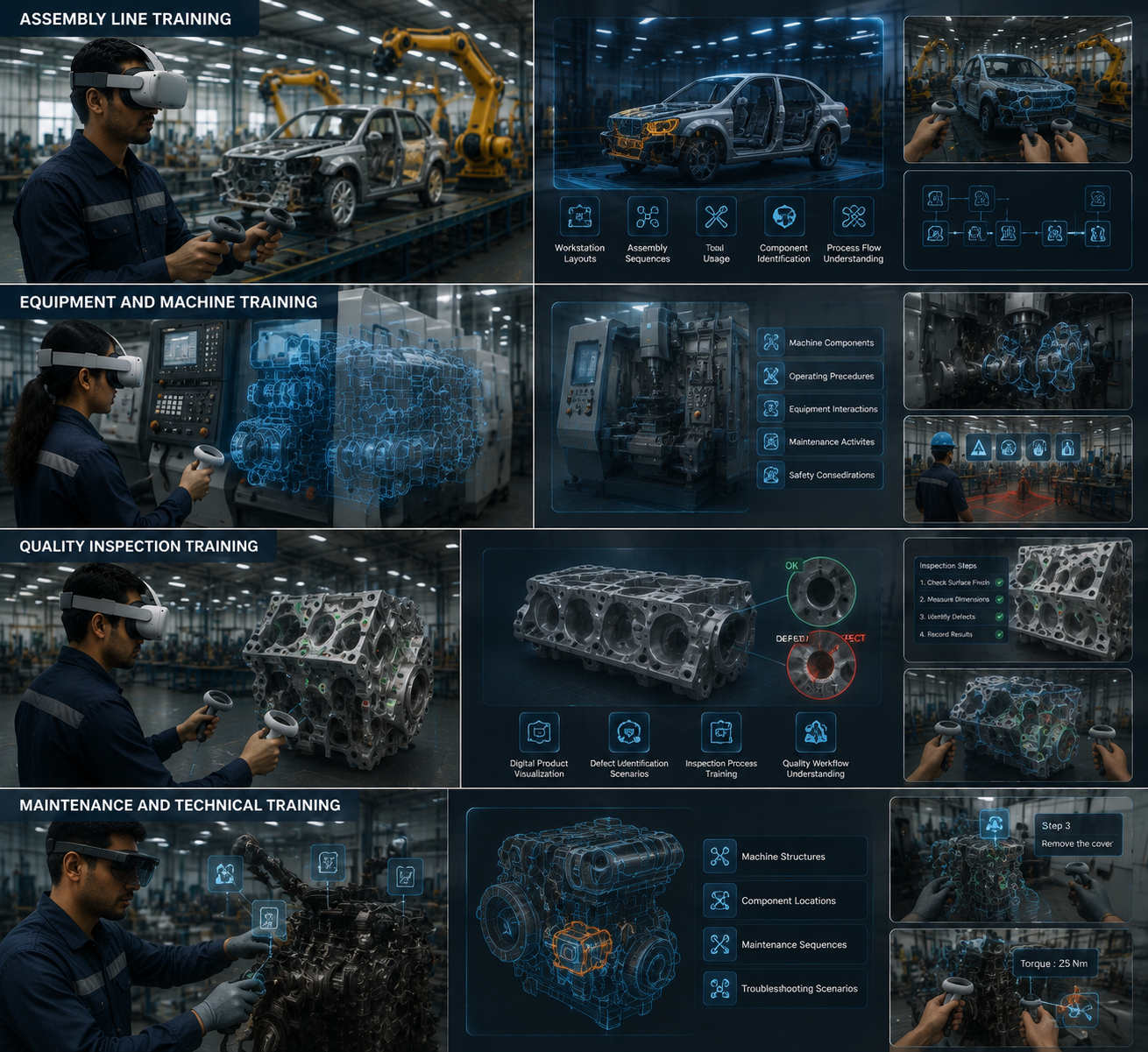
Assembly Line Training
Automotive assembly involves multiple steps, components, and quality requirements.
VR-based training can simulate assembly environments where employees learn:
- Workstation layouts
- Assembly sequences
- Tool usage
- Component identification
- Process flow understanding
Employees can become familiar with the workflow before performing tasks on an active production line.
Equipment and Machine Training
Manufacturing environments often include specialized machinery and automation systems.
Immersive training can help employees understand:
- Machine components
- Operating procedures
- Equipment interactions
- Maintenance activities
- Safety considerations
This can be especially useful when introducing new equipment or training employees before practical sessions.
Quality Inspection Training
Quality inspection requires employees to identify specific standards and process requirements.
AR and VR can support inspection learning through:
- Digital product visualization
- Defect identification scenarios
- Inspection process training
- Quality workflow understanding
This creates opportunities for employees to practice recognition and decision-making in a controlled environment.
Maintenance and Technical Training
Maintenance teams often work with complex systems where understanding equipment relationships is important.
VR environments can help technicians explore:
- Machine structures
- Component locations
- Maintenance sequences
- Troubleshooting scenarios
AR can provide digital guidance where employees need contextual information during physical tasks.
Traditional Training vs Immersive Manufacturing Training
Traditional methods remain valuable, but immersive learning introduces additional possibilities.
| Traditional Training | Immersive Training |
|---|---|
| Classroom explanation | Interactive simulation |
| Static diagrams | 3D visualization |
| Limited practice scenarios | Controlled virtual practice |
| Physical equipment dependency | Digital learning environment |
| Trainer-dependent delivery | Standardized digital experience |
The strongest approach is often a combination of instructor-led learning, practical sessions, and immersive technology.
Building a Scalable Manufacturing Training Program
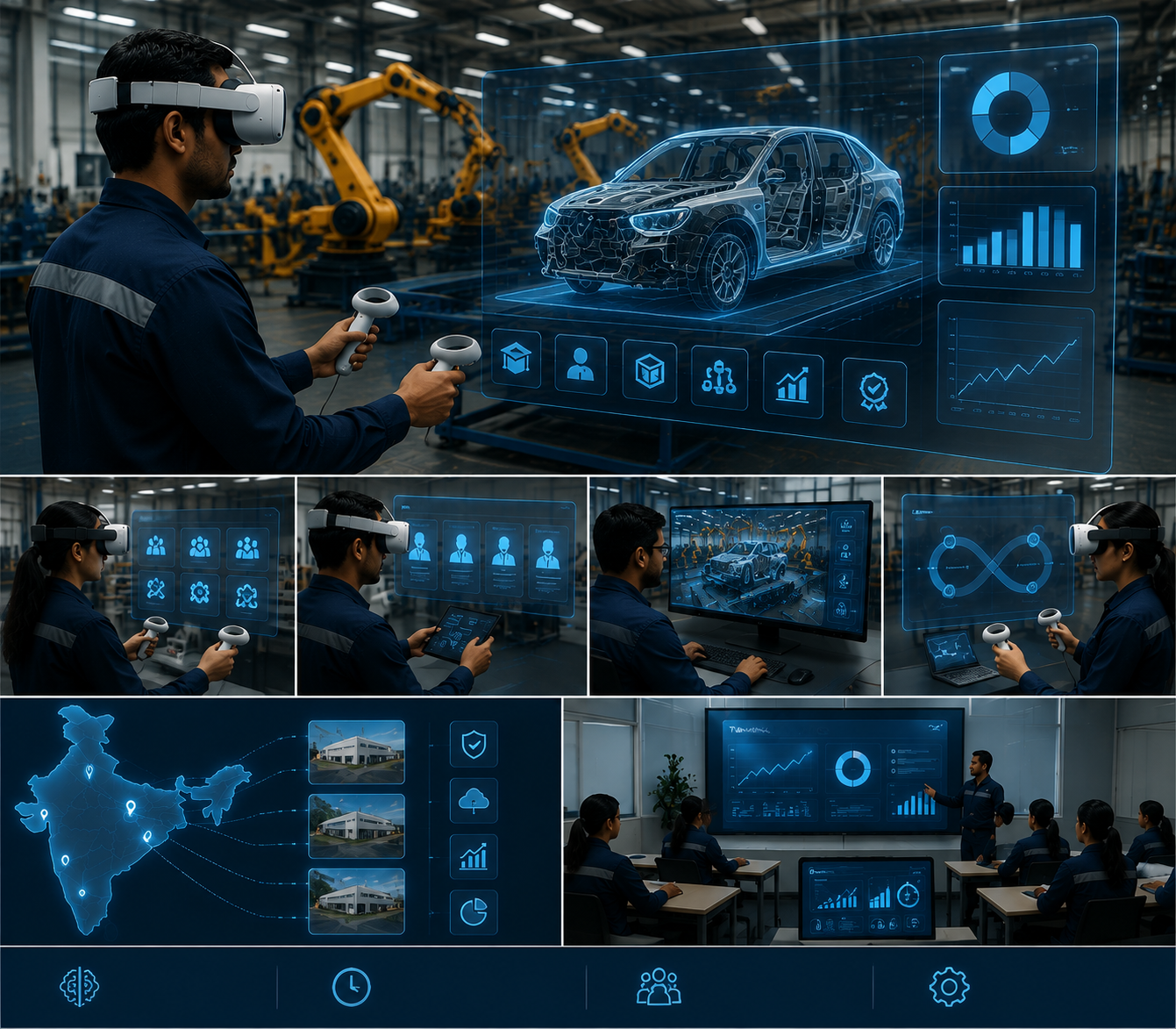
For automotive organizations operating multiple production areas or facilities, training consistency is a major consideration.
A scalable training approach may include:
Standardized Learning Modules
Create consistent training experiences for employees across departments.
Role-Based Training
Develop learning paths according to employee responsibilities such as operators, technicians, engineers, and supervisors.
Digital Process Visualization
Represent production workflows, equipment, and operational environments digitally.
Continuous Skill Development
Use immersive learning beyond onboarding for refresher and advanced training.
Organizations exploring manufacturing workforce training Chennai can benefit from solutions designed around specific operational requirements rather than generic learning content.
How AR Supports Shop Floor Learning
Augmented Reality can provide digital information connected to real-world environments.
Potential applications include:
- Assembly guidance
- Equipment instructions
- Maintenance assistance
- Component identification
- Process verification
For example, an employee working near a machine can access visual guidance that explains specific components or operational steps.
This approach can support learning directly within the workplace environment.
Selecting the Right AR/VR Training Solution
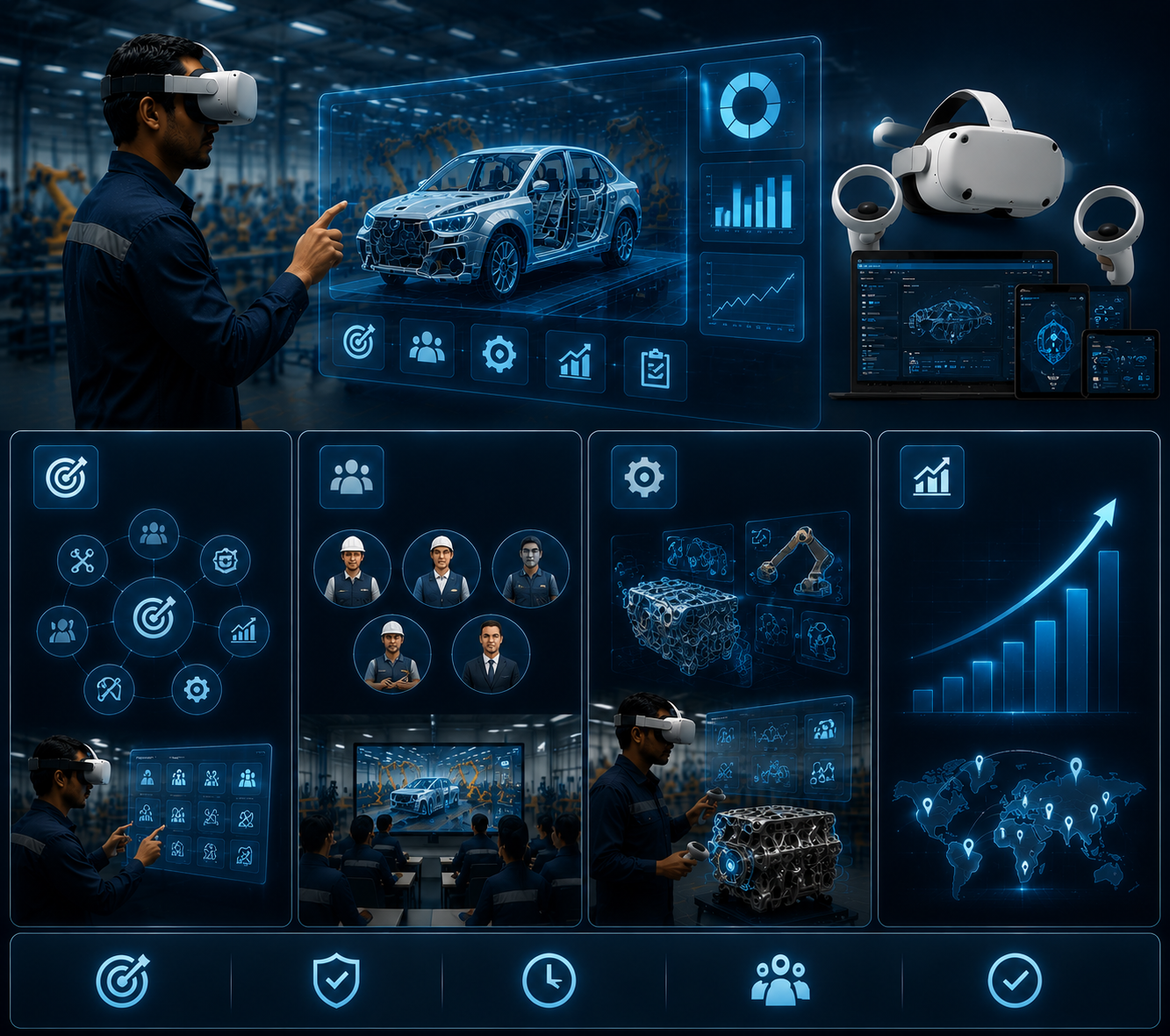
Companies evaluating AR training solutions Chennai should consider several factors.
Define the Training Objective
The requirement could be:
- New employee onboarding
- Assembly training
- Safety learning
- Equipment operation
- Maintenance training
- Quality inspection
Understand the Workforce
Different employee groups require different learning experiences.
Training requirements may vary between:
- Operators
- Engineers
- Maintenance teams
- Quality professionals
- Supervisors
Evaluate Content Customization
Automotive organizations often have unique processes, equipment, and workflows.
A useful immersive solution should reflect the organization’s operational environment.
Consider Long-Term Scalability
The platform should support future training requirements, additional modules, and workforce expansion.
How Yeppar Supports Automotive and Manufacturing Training
Organizations searching for immersive training solutions Chennai can explore AR, VR, MR, and Digital Twin-based learning environments designed for industrial workforce development.
Yeppar develops immersive solutions for manufacturing, automotive, aerospace, pharmaceutical, energy, defence, and other industries.
Its training applications support:
- Process training
- Equipment learning
- Safety awareness
- Simulation-based learning
- Digital Twin visualization
- Workforce skill development
Organizations evaluating advanced training approaches can Request a Free Demo to explore how immersive technologies can support automotive and manufacturing workforce requirements.
Future of Automotive Workforce Development
Automotive manufacturing is moving toward connected factories, automation, and advanced production technologies.
As processes become more sophisticated, workforce training will also need to become more adaptive and practical.
AR and VR provide organizations with additional tools to help employees understand complex systems, learn processes faster, and develop confidence before entering operational environments.
For automotive and manufacturing companies, immersive learning can become an important part of a modern workforce development strategy.
Conclusion
AR VR training solutions Chennai provide automotive and manufacturing organizations with new opportunities to improve workforce learning through simulation, visualization, and interactive experiences.
From assembly line training and equipment learning to quality inspection and maintenance education, immersive technologies can complement existing training methods and help employees better understand industrial processes.
Organizations should focus on selecting solutions based on their workforce needs, operational requirements, and long-term training objectives.
Companies exploring modern workforce development approaches can Request a Free Demo to understand how AR, VR, MR, and Digital Twin technologies can support automotive and manufacturing training programs.
Frequently Asked Questions
What are AR VR training solutions Chennai?
AR VR training solutions Chennai use augmented and virtual reality technologies to create immersive learning environments for automotive, manufacturing, and industrial workforce training.
How can automotive companies use VR training?
Automotive companies can use VR training for assembly learning, equipment familiarization, maintenance training, quality inspection practice, safety awareness, and employee onboarding.
Can VR improve manufacturing workforce training?
Yes. VR can provide simulation-based learning experiences that help employees understand processes, equipment, and workplace scenarios before practical application.
What is the role of AR in manufacturing training?
AR can provide digital guidance, instructions, and information connected to physical equipment and workplace environments, supporting practical learning.
Which manufacturing teams can benefit from immersive training?
Operators, engineers, maintenance teams, supervisors, quality teams, and new employees can benefit from immersive learning experiences.
Can AR and VR training content be customized?
Yes. Training solutions can be developed around specific machines, workflows, processes, employee roles, and organizational requirements.

 Contact Us