


 Agriculture
  Manufacturing
 Automobile
 Pharmaceutical
 RealEstate
 Education
 Events
 Industry 4.0
 Lab Setup
 Training
 Product Demonstrator
 Remote Assistance (MR)
 Virtual Showroom
 Virtual Try on
 Print Media
  Virtual Reality

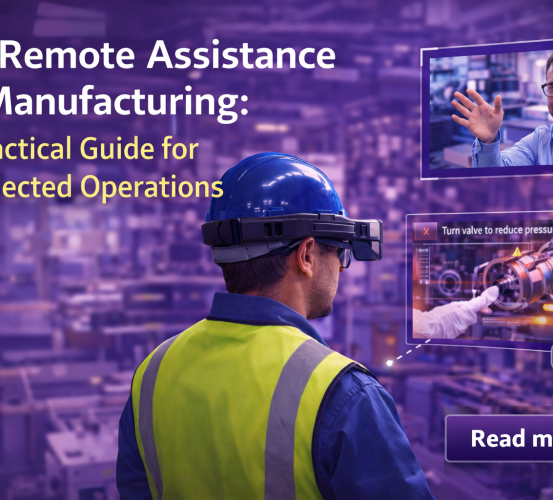
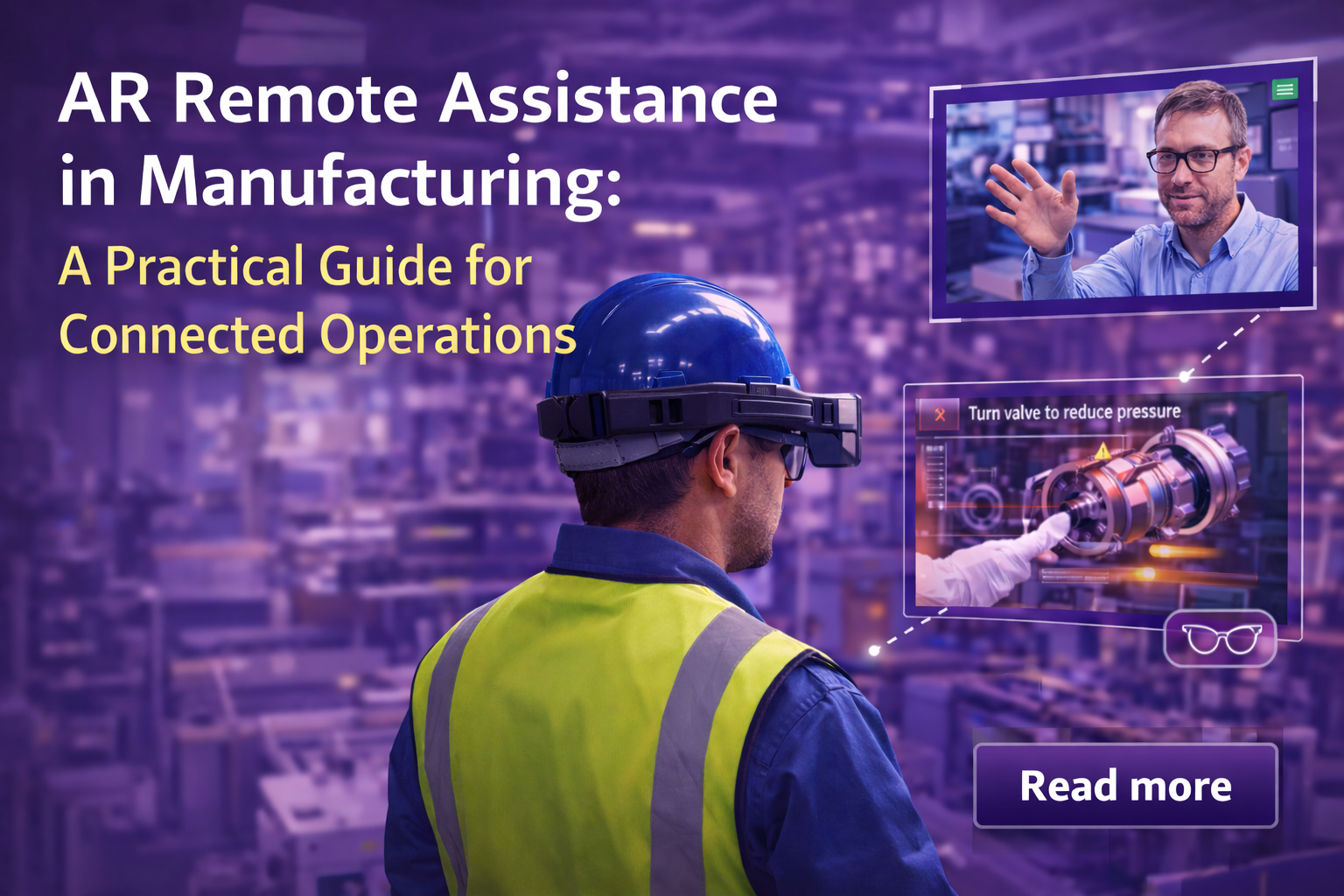
Introduction: Manufacturing Support Is Changing
Manufacturing operations today rely on complex machinery, connected systems, and precise execution on the shop floor. As factories evolve, access to timely expertise has become just as important as access to equipment.
AR remote assistance enables real-time visual collaboration between on-site manufacturing workers and remote experts using augmented reality overlays. By allowing both parties to share the same live view of equipment and processes, it improves clarity during maintenance, inspections, and operational tasks.
This approach fits naturally within Industry 4.0 and connected worker strategies, where digital tools are used to enhance human capabilities rather than replace them.
What Is AR Remote Assistance in Manufacturing?
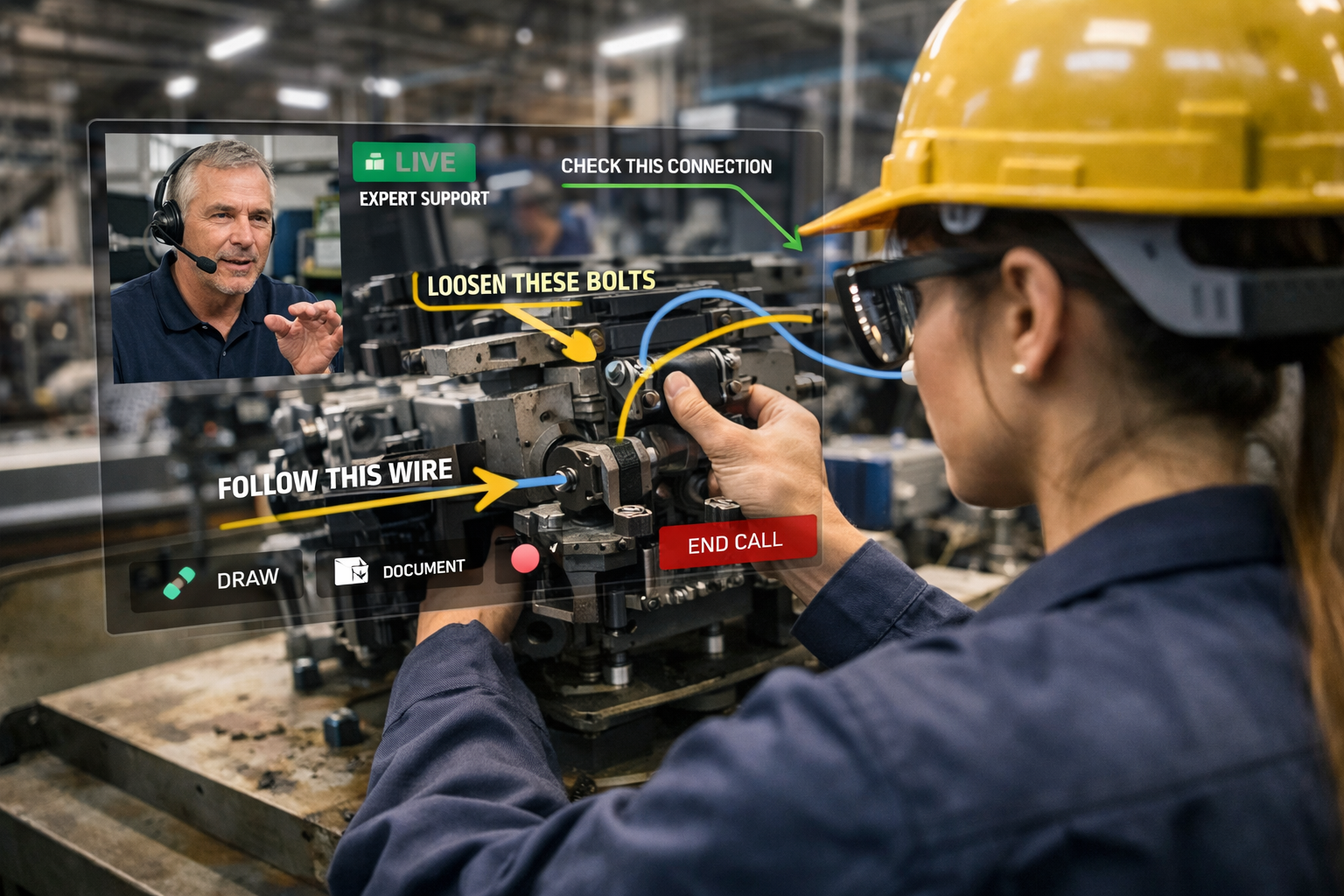
AR remote assistance is a technology-enabled method that allows frontline manufacturing workers to receive real-time visual guidance from remote specialists through augmented reality applied to live video feeds.
Instead of relying only on phone calls or written instructions, workers and experts see the same environment. Digital annotations—such as arrows, highlights, or notes—are overlaid directly on physical equipment.
This shared visual context reduces misunderstanding during complex or unfamiliar tasks.
How AR Remote Assistance Works
AR remote assistance typically follows a simple and practical workflow.
A worker initiates a live video session using a smartphone, tablet, or AR headset. A remote expert joins the session and views the equipment or workspace in real time.
The expert adds visual cues directly onto the live feed. The worker follows these instructions while performing the task, maintaining full awareness of the physical environment.
This real-time, visual interaction improves collaboration without disrupting existing workflows.
Role of AR Remote Assistance in Industry 4.0
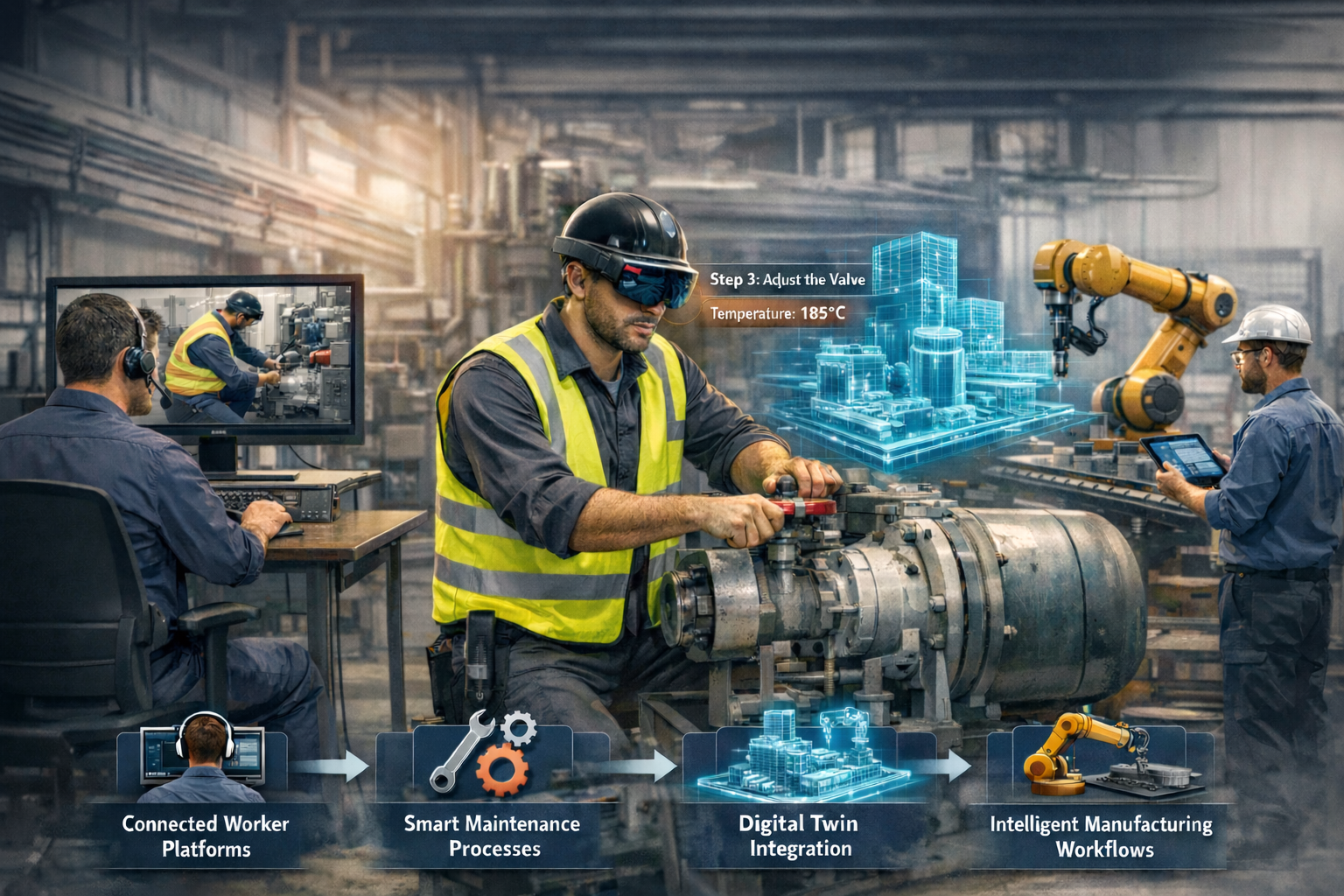
Industry 4.0 focuses on connectivity, data-driven decisions, and smarter operations. AR remote assistance supports this vision by strengthening how people interact with digital systems.
It works alongside:
-
Connected worker platforms
-
Smart maintenance processes
-
Digital twin integration
-
Intelligent manufacturing workflows
Rather than operating as a standalone tool, AR remote assistance complements broader digital transformation initiatives.
Key Benefits for Manufacturing Operations
Bridging the Skills Gap
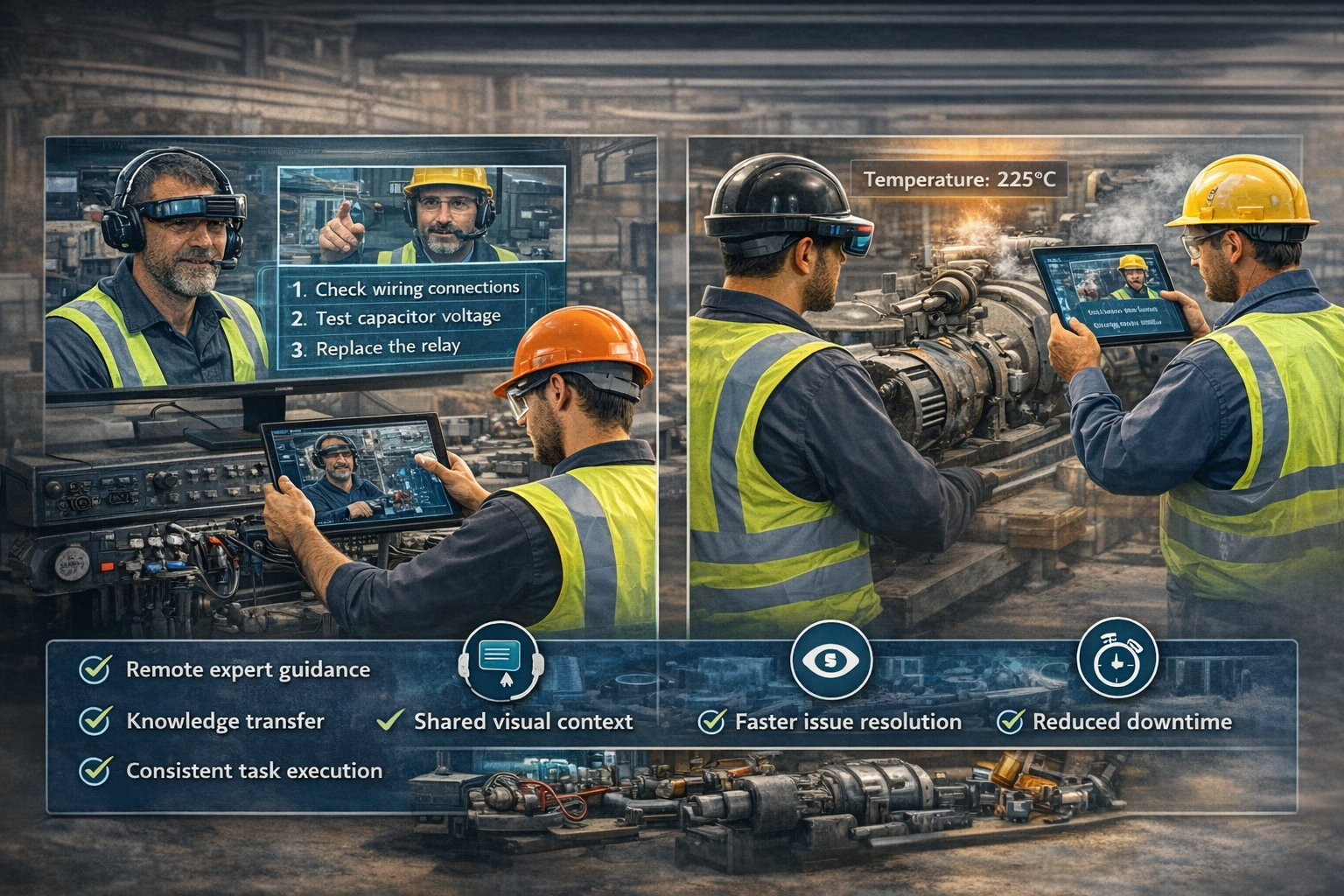
Many manufacturing organizations face challenges related to workforce experience. Skilled technicians are often limited in number, while newer workers require guidance during complex tasks.
AR remote assistance allows experienced professionals to support frontline workers remotely. Visual guidance delivered at the point of work supports knowledge transfer and consistent task execution.
This approach helps organizations distribute expertise more effectively across locations.
Supporting Downtime Reduction Efforts
Downtime is often influenced by delayed diagnosis or unclear communication. When issues arise, AR remote assistance improves coordination by providing shared visual context.
Clear guidance helps teams identify problems more accurately and respond with greater confidence, without relying solely on verbal explanations or delayed site visits.
Practical Use Cases on the Factory Floor
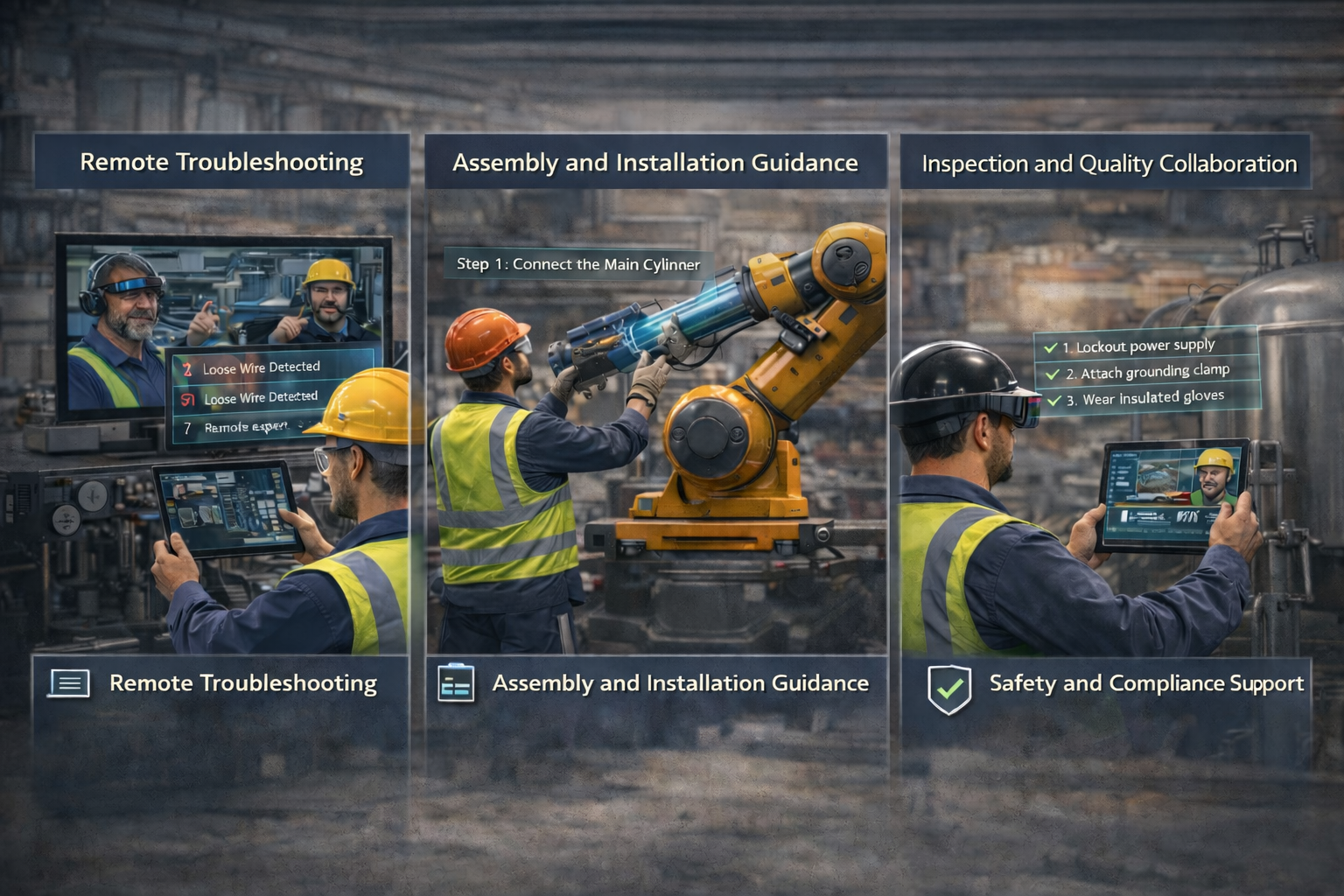
Remote Troubleshooting
Workers can stream live views of machinery to remote experts. Specialists guide inspections or adjustments using visual annotations, improving clarity during fault resolution.
This approach is particularly useful for complex or unfamiliar equipment.
Assembly and Installation Guidance
Assembly and setup tasks often involve precise sequences. AR overlays help workers follow step-by-step instructions during equipment installation or production line changes.
Visual guidance supports accuracy during critical setup activities.
Inspection and Quality Collaboration
During inspections, AR remote assistance allows real-time collaboration with off-site quality teams. Experts can review inspection points and provide immediate feedback.
This supports more consistent quality practices across shifts and facilities.
Safety and Compliance Support
Manufacturing environments require strict adherence to safety procedures. AR guidance visually reinforces steps before or during task execution.
Displaying instructions directly on real equipment helps reduce misinterpretation during safety-critical operations.
AR Remote Assistance vs Traditional Support Methods
| Aspect | Traditional Support | AR Remote Assistance |
|---|---|---|
| Communication | Voice or text-based | Visual and contextual |
| Task clarity | Dependent on explanation | Shared real-world view |
| Expert access | Often delayed | Near real-time |
| Knowledge transfer | Manual-based | Live task guidance |
This comparison highlights how AR improves communication rather than changing who performs the work.
The Connected Worker Perspective
The connected worker model focuses on empowering frontline employees with timely access to information and expertise.
AR remote assistance supports this by:
-
Delivering guidance at the moment of need
-
Improving collaboration across locations
-
Enhancing task confidence without automation dependency
It strengthens human decision-making within digital manufacturing environments.
Future Outlook: AR in Manufacturing
As manufacturing continues to digitize, AR remote assistance is expected to evolve alongside other technologies.
Future developments may include:
-
Deeper integration with digital twins
-
Contextual data overlays from IoT systems
-
AI-assisted guidance recommendations
-
More lightweight and ergonomic AR devices
AR is likely to become a standard collaboration layer within smart manufacturing ecosystems.
Frequently Asked Questions (FAQ)
What industries use AR remote assistance?
AR remote assistance is used across automotive, engineering, electronics, energy, and process manufacturing, especially where equipment complexity and distributed expertise exist.
Is AR remote assistance difficult to implement?
Implementation depends on device selection, connectivity, and workflow alignment. Many solutions are designed to integrate with existing systems rather than replace them.
Does AR remote assistance replace on-site experts?
No. It extends expert reach by enabling remote guidance, while on-site expertise remains essential.
What skills are required to use AR remote assistance?
Most platforms require basic familiarity with mobile or wearable devices. Interfaces are generally designed for ease of use in industrial settings.
How does AR remote assistance support long-term manufacturing goals?
It aligns with Industry 4.0, connected worker strategies, and digital transformation by improving collaboration, knowledge sharing, and operational visibility.
Conclusion: A Practical Step Toward Smarter Manufacturing
AR remote assistance enhances how manufacturing teams collaborate by enabling real-time visual guidance during critical tasks. Its value lies in improving clarity, coordination, and knowledge sharing—without overstated promises.
As factories continue to modernize, AR remote assistance stands as a practical and scalable tool supporting connected, resilient manufacturing operations.

 Contact Us