


 Agriculture
  Manufacturing
 Automobile
 Pharmaceutical
 RealEstate
 Education
 Events
 Industry 4.0
 Lab Setup
 Training
 Product Demonstrator
 Remote Assistance (MR)
 Virtual Showroom
 Virtual Try on
 Print Media
  Virtual Reality

Introduction
Manufacturing training often takes place on the shop floor or in classrooms. While these methods are useful, they may not always provide a controlled space where employees can learn, practice, and improve without affecting ongoing operations.
To address this, many organizations use a dedicated training approach known as Dojo training. This method focuses on structured, hands-on learning in a controlled environment where employees can build skills before applying them in real production settings.
What Is Dojo Training in Manufacturing?
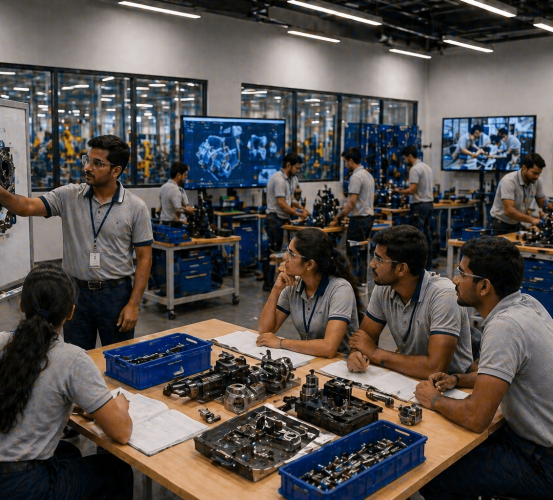
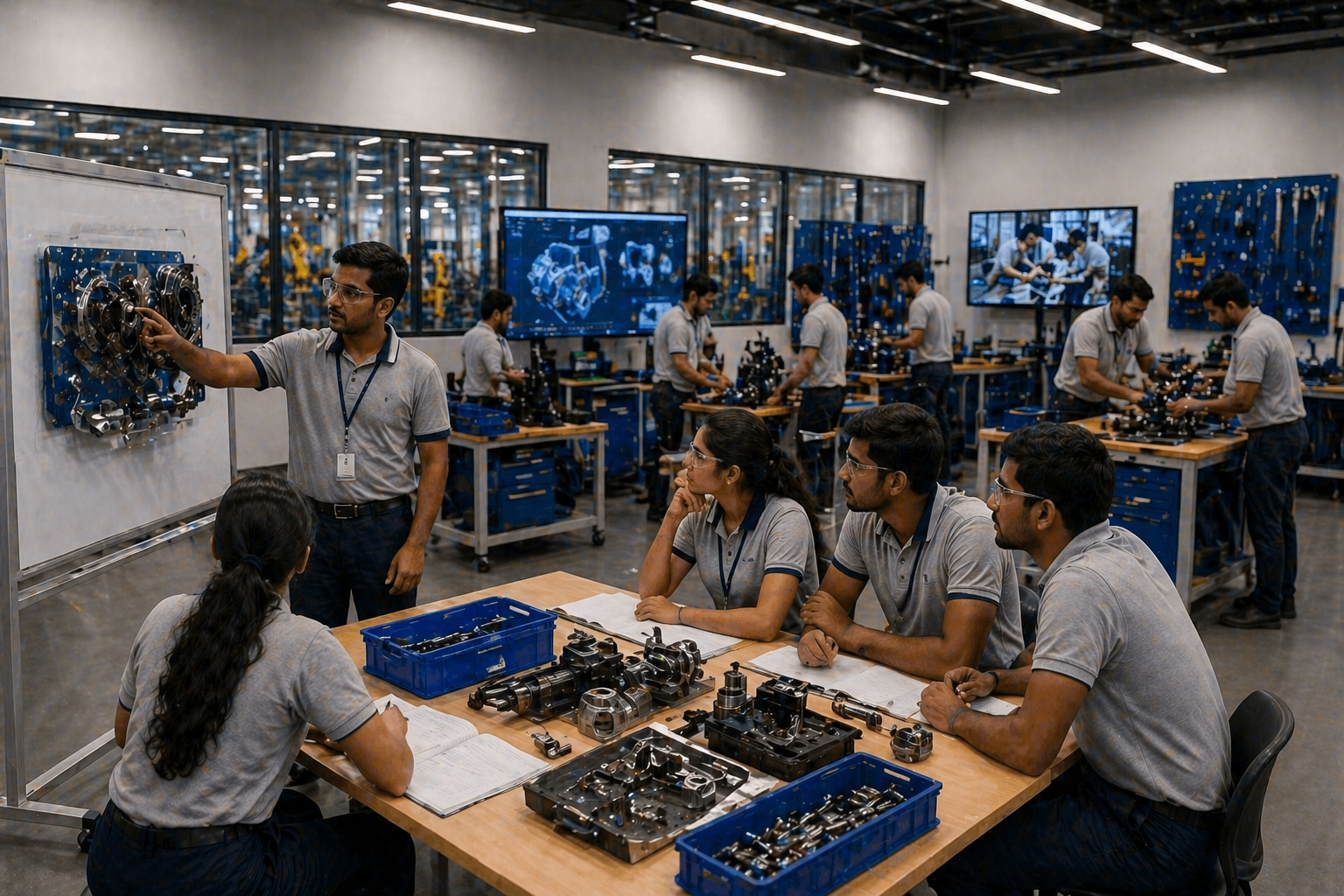
Dojo training in manufacturing is a structured training approach where employees learn and practice tasks in a controlled environment designed to replicate real shop-floor conditions.
A Dojo typically includes:
- Simulated workstations
- Defined training tasks
- Step-by-step learning sequences
- Instructor guidance
In simple terms, it is a practice-focused training space separate from live production.
Why Is Dojo Training Used in Manufacturing?
Dojo training is used to provide a consistent and structured way of developing skills.
It helps:
- Create a safe space for learning
- Allow repeated practice without production pressure
- Ensure consistent training across employees
- Support clear understanding of tasks
This approach is especially useful when accuracy and consistency are important.
How Does Dojo Training Work?
Dojo training follows a structured learning process.
Step 1: Demonstration
The trainer explains and demonstrates the correct method.
Step 2: Guided Practice
The trainee performs the task with support and feedback.
Step 3: Independent Practice
The trainee repeats the task independently.
Step 4: Verification
The trainer confirms that the task is performed correctly.
This process helps ensure that learning is consistent and repeatable.
A Simple Example
In an assembly process:
- Instead of learning directly on the production line
- Employees practice in a Dojo setup that replicates the workstation
This allows:
- Mistakes to be corrected without impact
- Steps to be repeated until understood
- Trainers to focus on skill development
Once ready, employees move to the actual shop floor.
What Makes Dojo Training Effective?
Effective Dojo training includes:
- A controlled training environment
- Clear and standardized work methods
- Repetition of tasks
- Immediate feedback from trainers
- Defined learning objectives
These elements help employees build confidence before real work.
Where Dojo Training Is Used
Dojo training is commonly used in:
- Operator onboarding
- Skill development programs
- Process training
- Quality-focused training
- Continuous improvement initiatives
It is especially useful when training needs to be consistent across teams.
Common Misunderstandings
Some common misconceptions include:
- It replaces shop-floor training
- It is only for new employees
- It is difficult to implement
In reality, Dojo training supports existing training methods and can be used for both new and experienced employees.
Supporting Dojo Training with Digital Approaches
Modern manufacturing environments often combine physical Dojo setups with digital tools to enhance learning.
In this context, Yeppar supports manufacturing teams by creating visual and immersive training environments that complement Dojo-based learning. These environments help employees understand tasks and workflows more clearly.
Such approaches focus on improving understanding while working alongside existing training systems.
Conclusion
Dojo training provides a practical way to improve learning in manufacturing by creating a dedicated space for practice and skill development. It allows employees to learn without the pressure of live production while maintaining consistency in training methods.
By combining structured practice with clear guidance, Dojo training supports better understanding and smoother transition to real shop-floor work.
FAQs
What is Dojo training in manufacturing?
It is a structured training method where employees practice tasks in a controlled environment before working on the shop floor.
Who can benefit from Dojo training?
New employees, operators, technicians, and even experienced workers.
Does Dojo training replace real work training?
No. It prepares employees before they move to real production environments.
Why is Dojo training effective?
Because it allows repeated practice, clear instruction, and immediate feedback.
Is Dojo training only for large factories?
No. It can be adapted to different manufacturing setups.

 Contact Us