

 Agriculture
  Manufacturing
 Automobile
 Pharmaceutical
 RealEstate
 Education
 Events
 Industry 4.0
 Lab Setup
 Training
 Product Demonstrator
 Remote Assistance (MR)
 Virtual Showroom
 Virtual Try on
 Print Media
  Virtual Reality

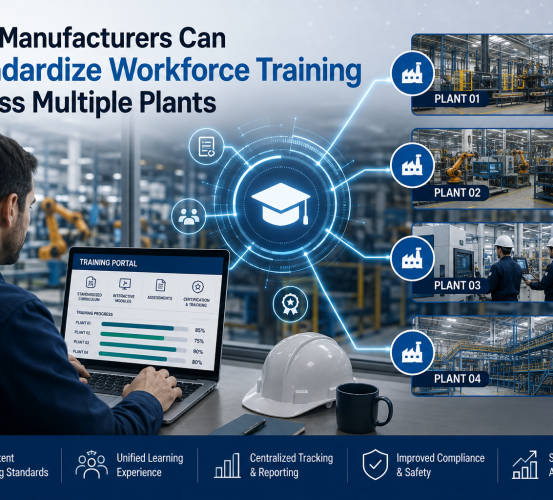
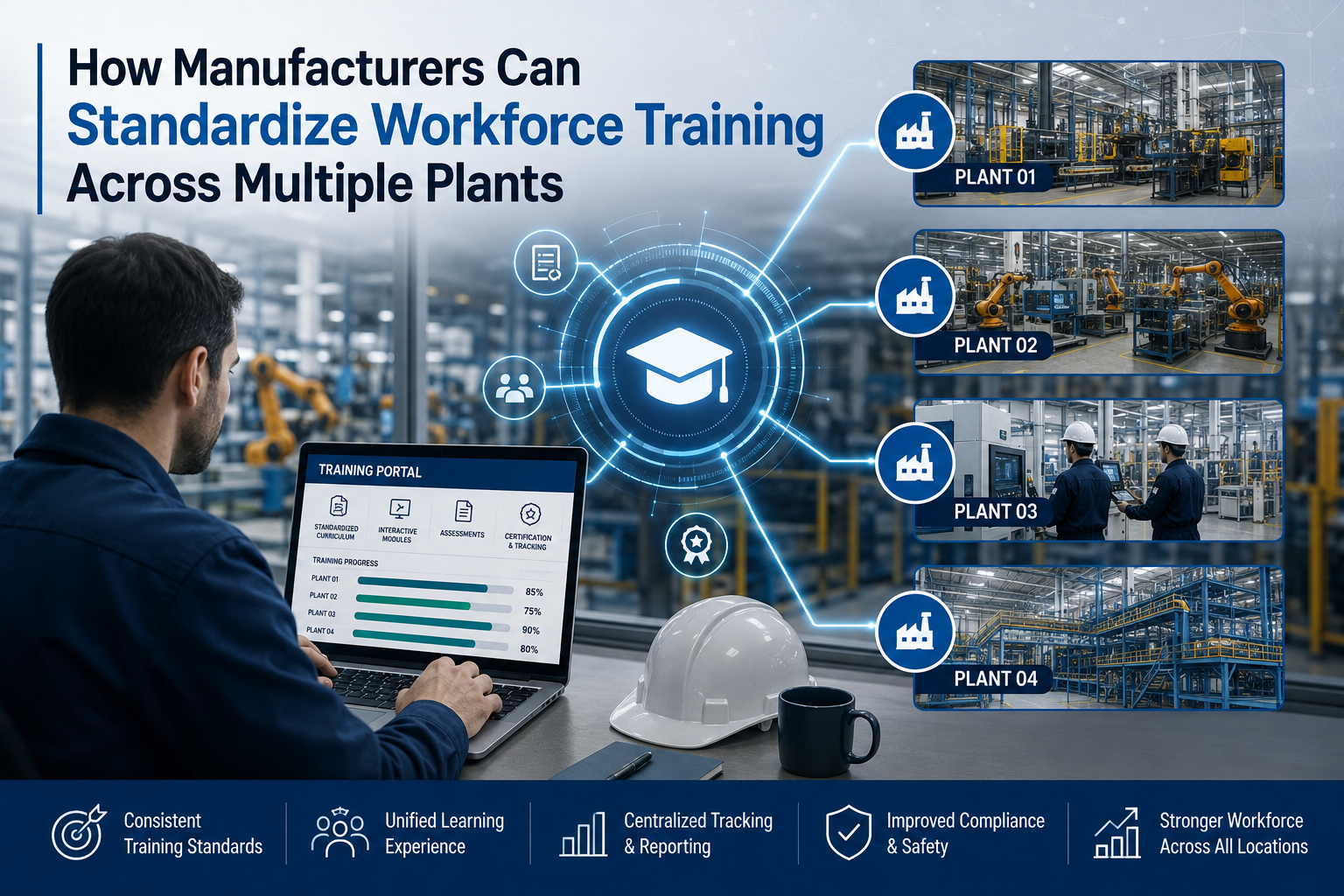
When Every Plant Trains Differently, Consistency Becomes the Biggest Challenge
A manufacturing organization expands into new regions, opens additional production facilities, or acquires another plant. While production capacity increases, another challenge begins to emerge—employees at different locations often learn the same process in different ways.
One facility may rely on experienced operators to train new employees, another may follow printed SOPs, while a third may use classroom sessions combined with on-the-job demonstrations. Although every location follows the same operational objectives, the learning experience can vary significantly.
Over time, these differences make it difficult to maintain consistent operational practices across facilities.
For manufacturing leaders, the challenge is no longer only about training employees. It is about ensuring that every employee, regardless of location, receives the same quality of learning.
Why Training Consistency Matters More Than Ever
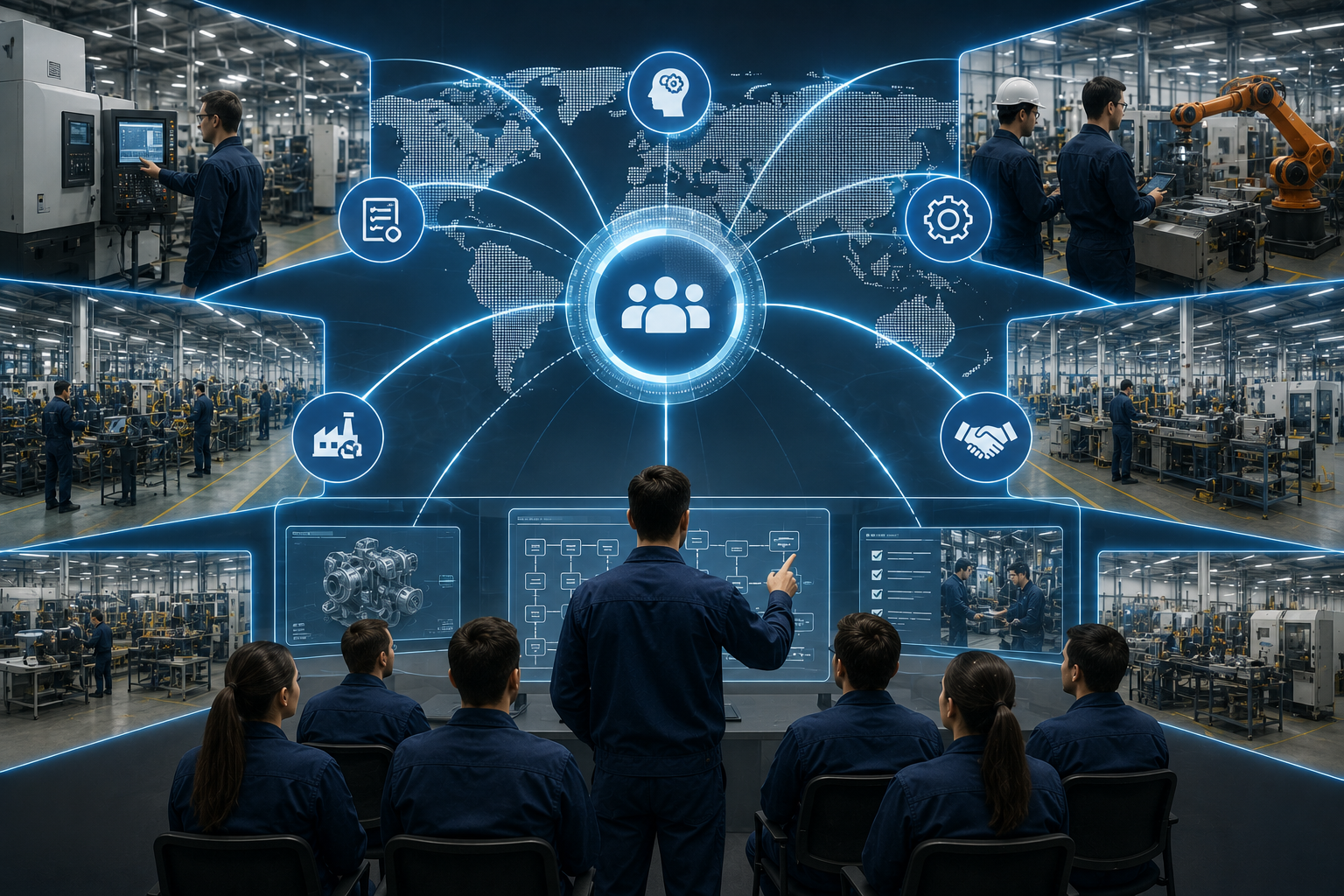
As manufacturing operations scale, consistency becomes a strategic objective rather than a training objective.
Different learning methods can create variations in:
- Process understanding
- Equipment familiarity
- Operational awareness
- Standard work execution
- Knowledge transfer between plants
When employees interpret the same procedure differently, collaboration across locations becomes more difficult.
A standardized training approach helps organizations establish a common learning framework while allowing local teams to adapt training delivery to their operational environment.
Why Traditional Training Models Become Difficult to Scale
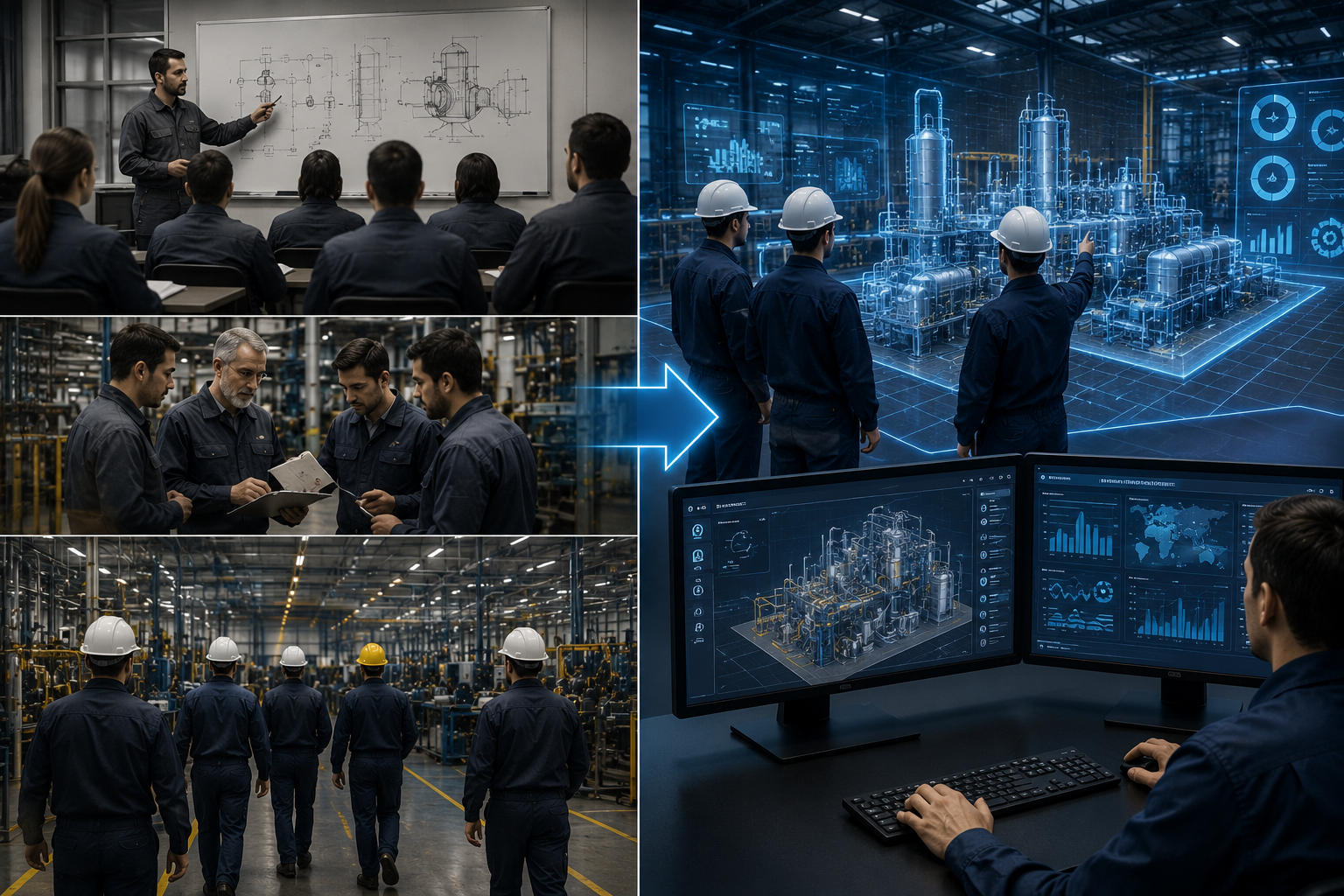
Many organizations successfully train employees at a single facility. However, expanding the same approach across multiple plants introduces new complexities.
Some common challenges include:
Different Trainers, Different Explanations
Even when the same SOP is followed, each trainer may explain procedures differently based on personal experience.
Inconsistent Onboarding
New employees joining different facilities may receive different levels of operational exposure during onboarding.
Limited Visibility into Training Quality
Training managers often find it difficult to understand whether employees across locations are learning the same way.
Knowledge Loss
Experienced employees hold valuable operational knowledge that is not always documented or transferred consistently.
What Leading Manufacturers Are Doing Differently
Instead of relying on individual training styles, many organizations are moving toward standardized learning ecosystems.
These organizations typically focus on three priorities:
- Creating repeatable learning experiences
- Improving process visualization
- Supporting continuous workforce development
Rather than replacing existing training programs, they enhance them with digital tools that improve consistency across facilities.
Building a Consistent Learning Framework
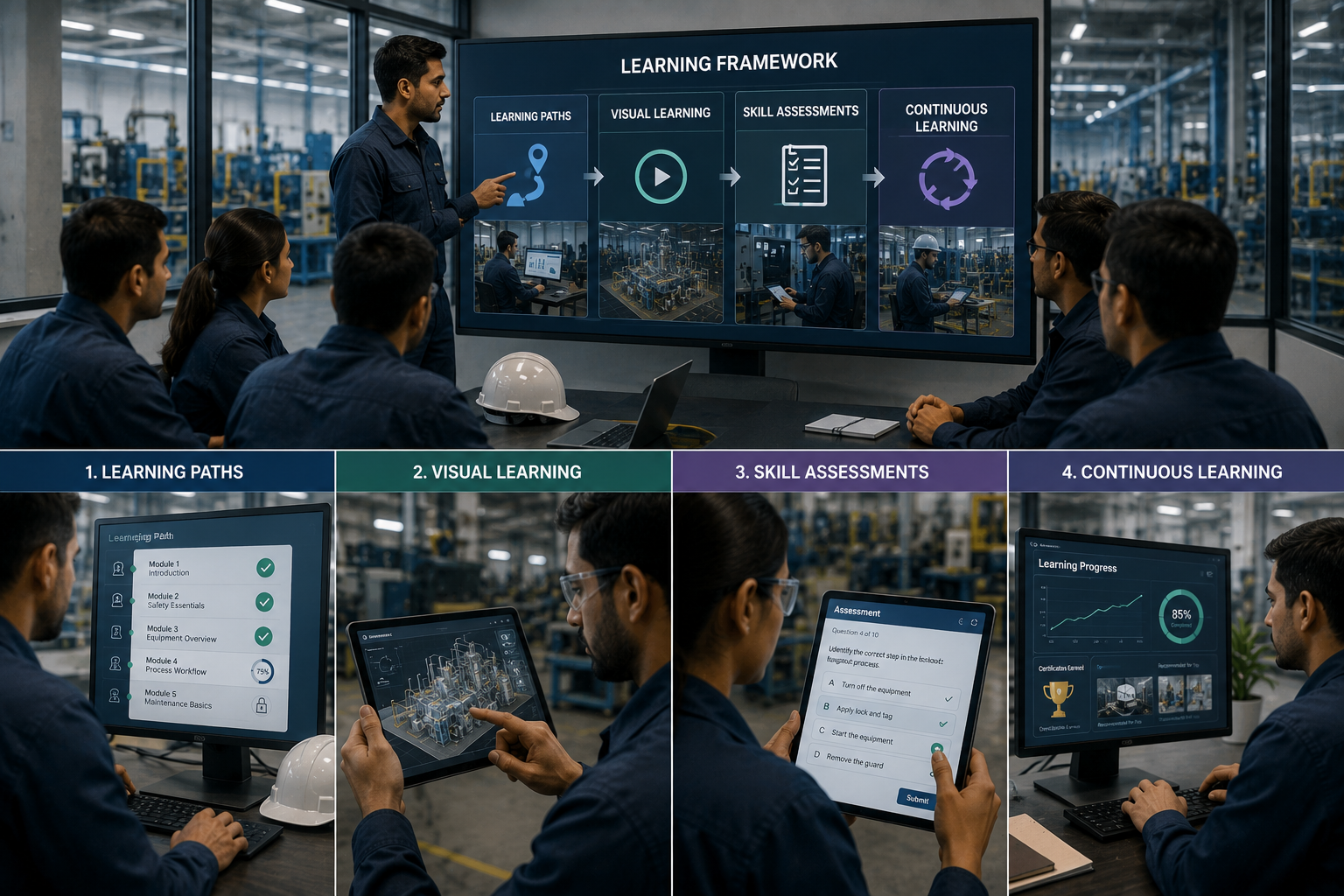
Standardization begins with defining how knowledge is delivered, not just what employees need to learn.
An effective workforce training framework usually includes:
Clearly Defined Learning Paths
Training follows structured modules that are consistent across every manufacturing location.
Visual Learning Experiences
Interactive learning materials help employees understand complex workflows more effectively than text alone.
Standardized Skill Assessments
Employees are evaluated using consistent learning objectives regardless of facility location.
Continuous Learning
Training extends beyond onboarding and supports ongoing workforce development.
Where Immersive Learning Fits
As manufacturing becomes increasingly digital, organizations are exploring technologies that help employees understand processes through experience rather than observation alone.
Interactive learning environments using AR, VR, MR, Digital Twin, and simulation technologies provide a consistent way to present operational workflows across multiple locations.
Instead of depending entirely on instructor-led demonstrations, employees can engage with standardized digital learning experiences that present the same operational procedures regardless of where they work.
Supporting Enterprise Manufacturing Training
Organizations investing in workforce transformation are increasingly exploring immersive training solutions to create consistent learning experiences across facilities.
In this area, Yeppar develops enterprise learning environments that combine AR, VR, MR, Digital Twin, and Dojo-based training to help manufacturers visualize processes, standardize workforce development, and support operational learning across multiple plants.
Manufacturers evaluating scalable workforce development strategies can Request a Free Demo to explore how immersive learning can complement existing training programs.
Conclusion
As manufacturing organizations continue to expand across multiple facilities, maintaining consistent workforce training becomes increasingly important. Standardized learning frameworks help organizations create repeatable training experiences, improve knowledge sharing, and support workforce readiness across locations.
By combining structured training methods with immersive learning technologies, manufacturers can build scalable workforce development programs that support long-term operational consistency while adapting to changing business needs.
Frequently Asked Questions
Why is workforce training consistency important across multiple manufacturing plants?
Consistent training helps employees follow standardized processes, improves knowledge transfer, and supports operational alignment across different facilities.
What are the biggest challenges when training employees across multiple plants?
Organizations often face inconsistent onboarding, different trainer approaches, knowledge transfer gaps, and varying learning experiences across locations.
How can immersive technologies support workforce standardization?
Immersive technologies provide visual and interactive learning experiences that help deliver consistent training content across multiple facilities while complementing existing training programs.
Can standardized training work alongside existing SOPs?
Yes. Standardized learning frameworks are designed to reinforce existing SOPs by presenting them in structured and consistent learning experiences.
What industries benefit from standardized workforce training?
Manufacturing, automotive, pharmaceutical, energy, construction, logistics, mining, and other industrial sectors can benefit from scalable workforce training approaches.

 Contact Us