

 Agriculture
  Manufacturing
 Automobile
 Pharmaceutical
 RealEstate
 Education
 Events
 Industry 4.0
 Lab Setup
 Training
 Product Demonstrator
 Remote Assistance (MR)
 Virtual Showroom
 Virtual Try on
 Print Media
  Virtual Reality

Introduction
The oil and gas industry operates in environments where employees must understand complex equipment, operational procedures, and site-specific requirements before carrying out their responsibilities. Whether working at refineries, processing facilities, offshore platforms, or pipeline operations, workforce readiness is essential for maintaining consistent operations.
Traditional training methods such as classroom sessions, manuals, toolbox talks, and on-site demonstrations remain valuable. However, many organizations are also exploring immersive learning technologies that provide employees with practical, interactive experiences before they enter operational environments.
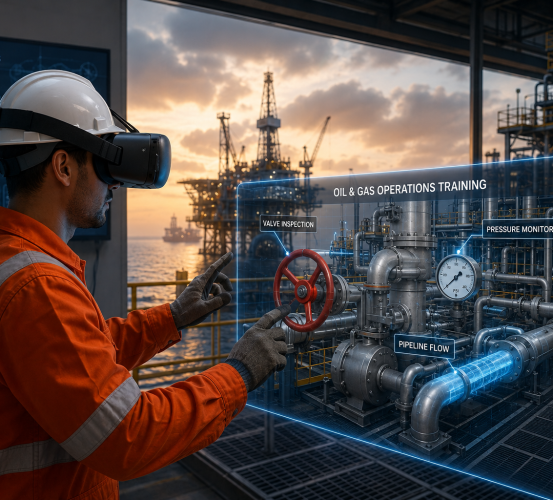
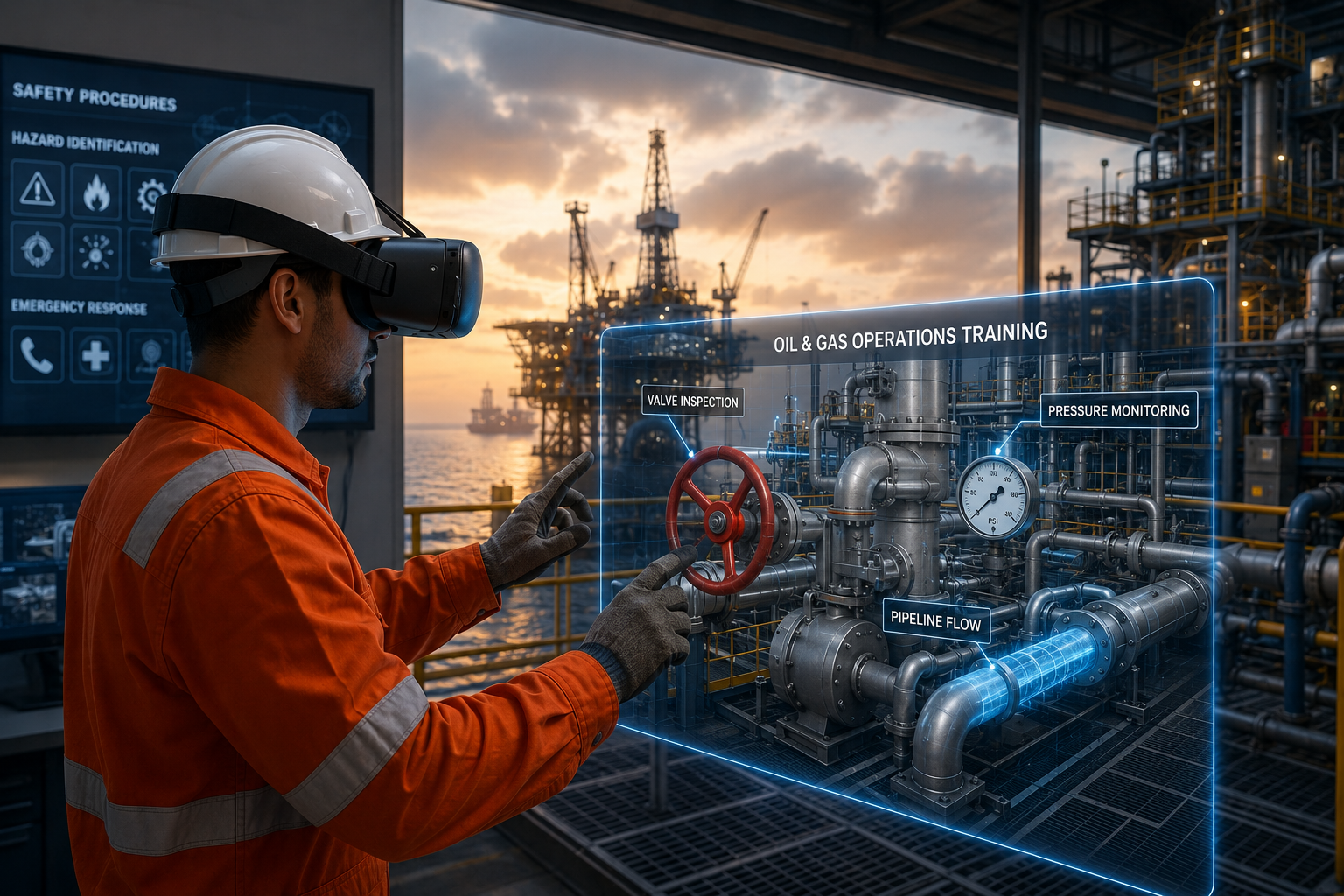
VR training for oil and gas operations enables organizations to create realistic training scenarios that help employees understand workflows, equipment, and workplace procedures through virtual experiences that complement existing training programs.
What Is VR Training in the Oil and Gas Industry?
VR training uses virtual reality technology to recreate operational environments where employees can learn procedures, explore equipment, and experience workplace scenarios in a controlled digital setting.
Training programs may include:
- Facility familiarization
- Equipment awareness
- Operational procedures
- Emergency response scenarios
- Maintenance process training
- Workforce onboarding
- Safety awareness exercises
The objective is to improve understanding through immersive learning while supporting existing workforce development programs.
Why Is Workforce Training Important in Oil and Gas?
Oil and gas operations often involve multiple teams working across different locations and environments. Employees need a clear understanding of equipment, workflows, communication protocols, and operational procedures before beginning their responsibilities.
Well-structured workforce training helps organizations:
- Improve operational awareness
- Standardize learning across teams
- Support new employee onboarding
- Strengthen process understanding
- Build familiarity with operational environments
A consistent training approach helps create a shared understanding across the workforce.
How Does VR Training Support Oil and Gas Operations?
Facility Familiarization
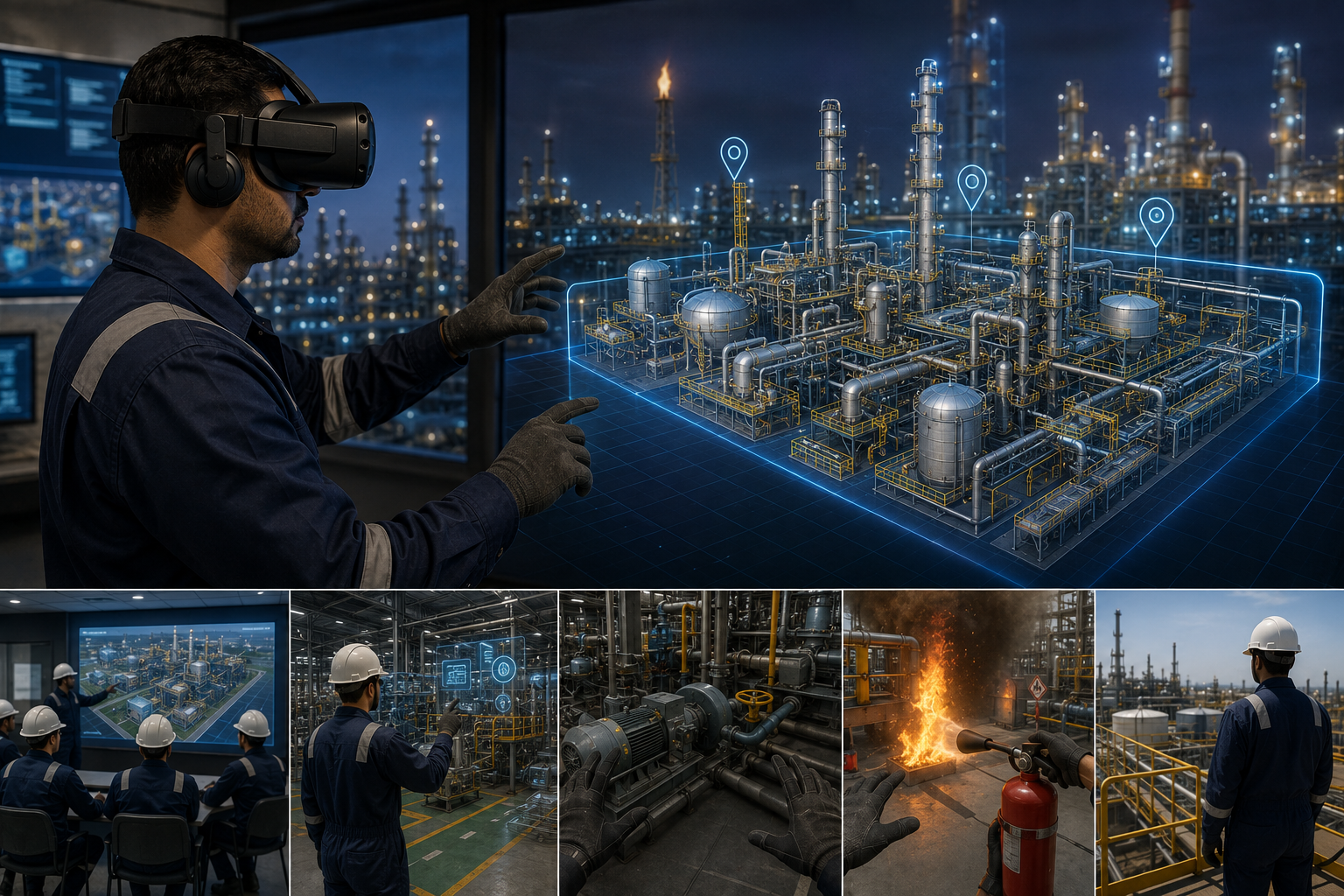
Employees can explore digital versions of operational facilities before visiting the actual site, helping them understand layouts, work areas, and operational zones.
Process Understanding
Complex operational workflows can be presented through interactive simulations, making procedures easier to visualize and understand.
Equipment Awareness
VR environments allow employees to become familiar with equipment, system layouts, and operational relationships before working with physical assets.
Scenario-Based Learning
Organizations can create realistic operational scenarios that allow employees to practice responses and decision-making in a controlled environment.
Consistent Workforce Training
Every participant receives the same learning experience, helping maintain consistency across teams, locations, and training sessions.
Practical Example
A company is preparing technicians for work at a gas processing facility.
Instead of relying only on presentations and site visits, trainees begin with a virtual learning session where they can:
- Explore the facility layout
- Identify operational zones
- Understand equipment locations
- Learn workflow sequences
- Review emergency procedures
- Become familiar with workplace expectations
After completing the immersive session, employees transition to practical site training with a better understanding of the operational environment.
Common Challenges with Traditional Training
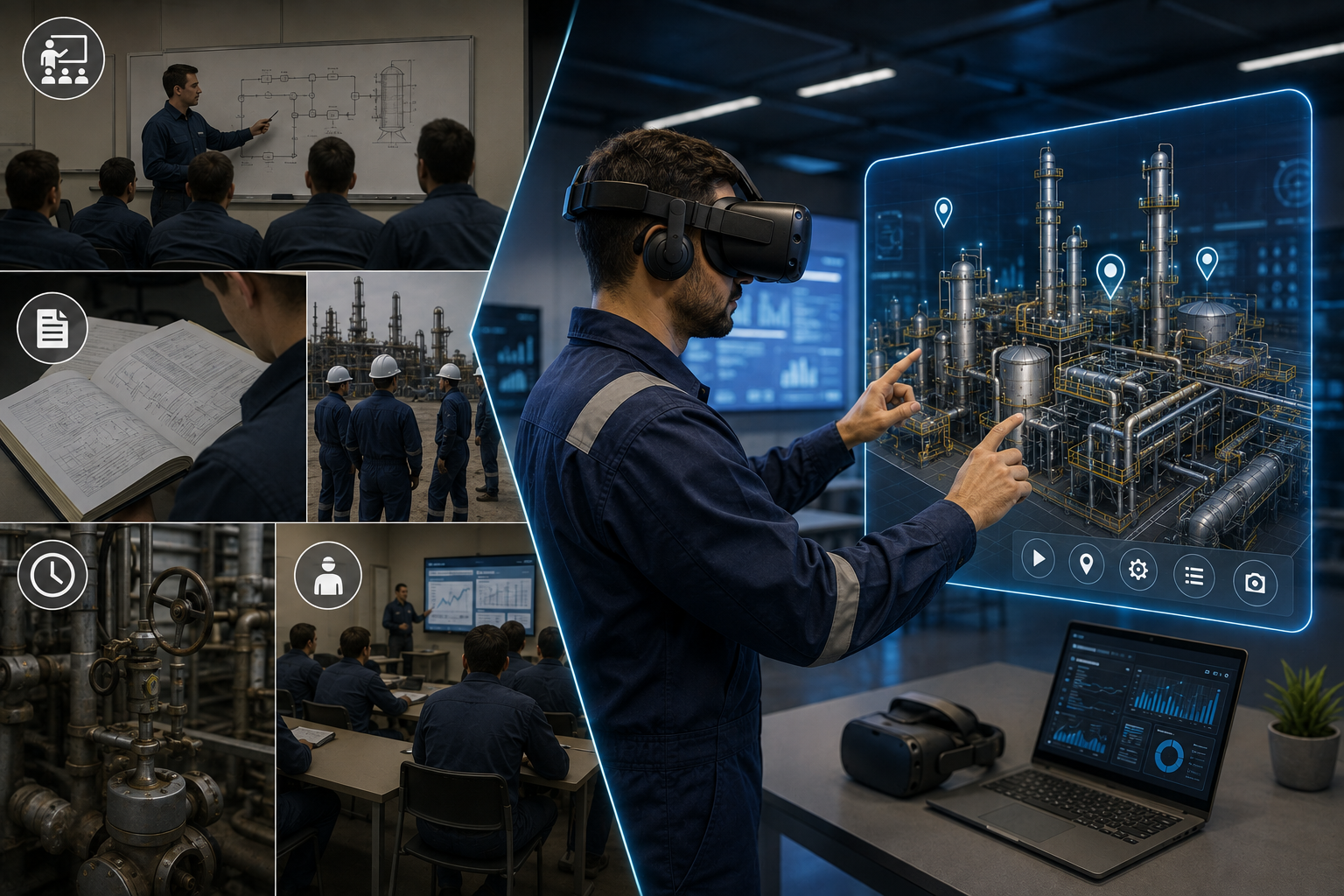
While traditional training remains an essential part of workforce development, organizations may encounter challenges such as:
- Limited opportunities to visualize complex facilities
- Differences in training delivery across locations
- Time required for site familiarization
- Difficulty recreating operational scenarios
- Varying learning preferences among employees
Immersive learning technologies help address these challenges by providing interactive experiences that complement existing training methods.
Where VR Training Delivers Value
VR training can support a wide range of workforce development initiatives, including:
- New employee onboarding
- Operational readiness programs
- Equipment familiarization
- Maintenance training
- Process awareness
- Safety learning
- Refresher training
- Cross-functional workforce development
These applications help employees gain confidence before entering operational environments.
Supporting Workforce Development with Immersive Technologies
Organizations investing in workforce development are increasingly exploring immersive training solutions to create more engaging learning experiences.
In this area, Yeppar develops immersive AR, VR, MR, Digital Twin, and Dojo-based training environments that help oil and gas organizations visualize operations, support workforce learning, and improve process understanding through interactive experiences.
Organizations evaluating modern workforce training approaches can Request a Free Demo to explore how immersive learning solutions can support operational training objectives.
Conclusion
As oil and gas operations continue to evolve, workforce development remains a key priority for organizations seeking to improve operational understanding and employee preparedness. Virtual reality training provides an immersive way to support learning by helping employees explore facilities, understand workflows, and become familiar with operational procedures before entering real work environments.
By combining traditional training with immersive technologies, organizations can create structured learning experiences that support workforce readiness, operational awareness, and continuous skill development.
Frequently Asked Questions
What is VR training for oil and gas operations?
VR training uses immersive virtual environments to help employees understand facilities, equipment, and operational procedures through interactive learning experiences.
How does VR support workforce training?
It provides employees with realistic scenarios that improve understanding of operational workflows, equipment, and workplace environments before practical field activities.
Can VR training replace traditional training?
No. VR training is designed to complement classroom instruction, on-site learning, and existing workforce development programs.
Which oil and gas teams can benefit from VR training?
Operators, maintenance technicians, field engineers, supervisors, contractors, and new employees can all benefit from immersive training experiences.
Why are oil and gas companies adopting immersive training?
Organizations are exploring immersive learning to improve workforce readiness, standardize training, enhance operational understanding, and support long-term workforce development.

 Contact Us