


 Agriculture
  Manufacturing
 Automobile
 Pharmaceutical
 RealEstate
 Education
 Events
 Industry 4.0
 Lab Setup
 Training
 Product Demonstrator
 Remote Assistance (MR)
 Virtual Showroom
 Virtual Try on
 Print Media
  Virtual Reality

Introduction
Manufacturing environments are becoming more connected, with machines, systems, and processes generating continuous data. To make better use of this information, many organizations are exploring ways to visualize and understand operations beyond the physical shop floor.
One such approach is the use of a digital twin. While the term may sound technical, its purpose is simple: to help teams see and understand manufacturing processes in a clearer and more connected way.
What Is a Digital Twin in Manufacturing?
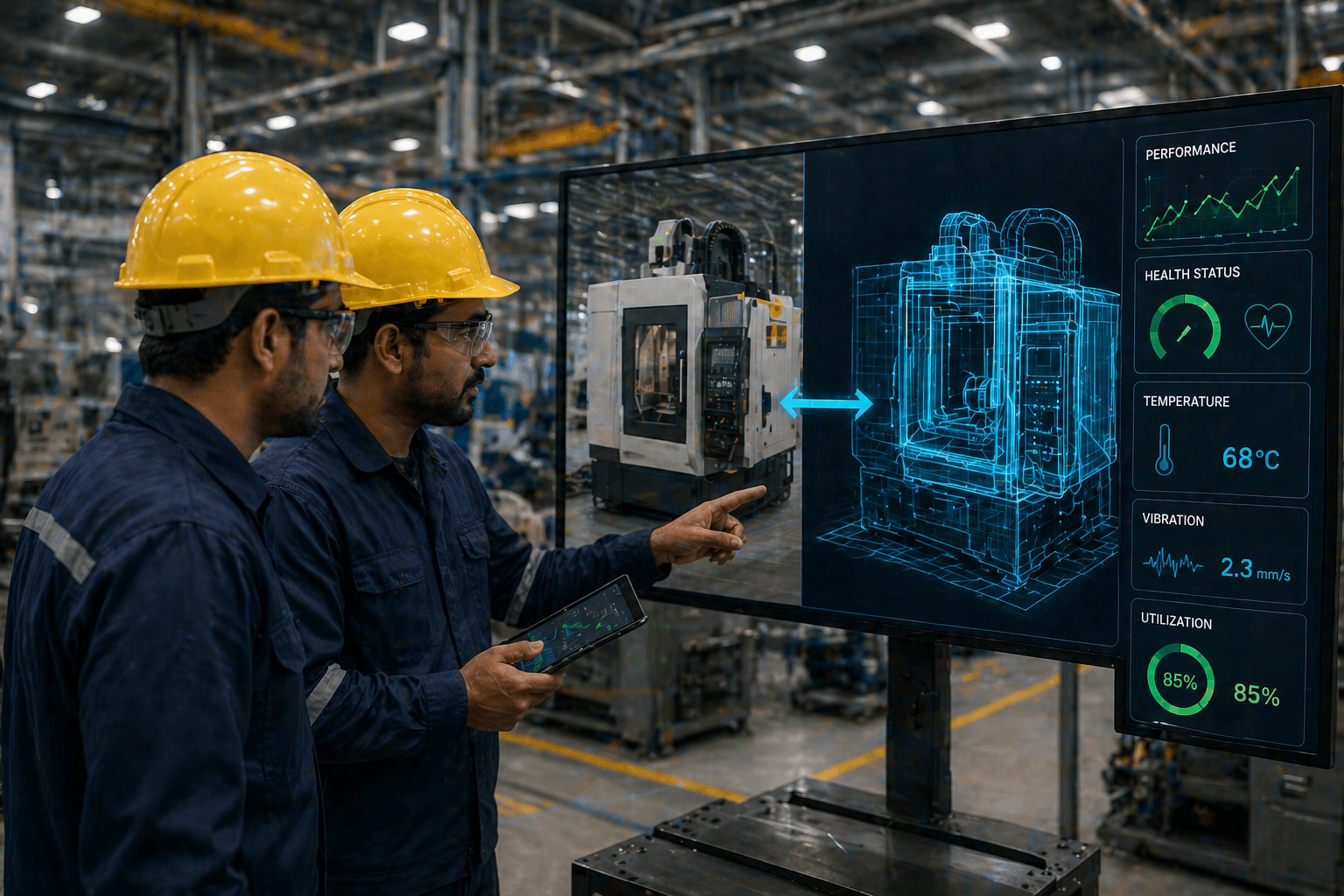
A digital twin in manufacturing is a virtual representation of a physical system, process, or facility.
It reflects real-world elements such as:
- Machines and equipment
- Production lines
- Workflows and processes
- Operational conditions
In simple terms, it is a digital version of what exists on the shop floor, allowing teams to view and understand operations without being physically present.
Why Is a Digital Twin Used in Manufacturing?
Short answer:
A digital twin is used to help manufacturing teams visualize processes, understand system behavior, and review operations in a more connected and accessible way.
From a practical perspective, it helps:
- Provide a clear view of complex systems
- Support discussions around processes and workflows
- Improve understanding across teams
- Create a shared reference for operations
It is especially useful in environments where multiple systems interact.
How Does a Digital Twin Work?
A digital twin works by combining data and visual models.
It typically includes:
- A digital model of machines or systems
- Data from sensors or operational systems
- Visualization tools to represent processes
This allows teams to:
- View how systems are connected
- Understand how processes flow
- Explore operations in a visual format
It does not replace the physical system—it represents it digitally.
A Simple Example from Manufacturing
Consider a production line with multiple machines.
Without a digital twin:
- Teams rely on separate screens, reports, or physical observation
With a digital twin:
- The entire production line can be viewed in one digital environment
- Machine relationships and workflow become easier to understand
- Teams can discuss operations using a shared visual reference
This makes communication more structured and clear.
Where Digital Twin Is Used in Manufacturing
Digital twins are commonly used in:
- Production line visualization
- Equipment and asset monitoring
- Training and onboarding
- Process understanding and planning
- Facility layout review
They are particularly useful in complex or large-scale manufacturing setups.
Common Misunderstandings
Some common misconceptions include:
- It replaces real operations
- It is only for advanced or automated factories
- It requires complex technical knowledge to use
In reality, digital twins are used as support tools for understanding, not as replacements for physical processes.
How Digital Twin Supports Training and Awareness
Digital twins are increasingly used to support training in manufacturing environments.
They help:
- New employees understand layouts and processes
- Teams visualize workflows before working on them
- Supervisors explain tasks more clearly
In this context, Yeppar supports manufacturing organizations by creating visual and immersive digital twin environments that help teams understand operations more effectively.
These approaches focus on clarity and awareness while working alongside existing systems.
Conclusion
A digital twin in manufacturing is a practical way to connect physical operations with digital understanding. By representing machines, processes, and workflows in a visual format, it helps teams see how everything fits together.
Rather than changing how work is done, it supports how work is understood. This makes it a useful tool for communication, training, and operational awareness across manufacturing environments.
FAQs
What is a digital twin in manufacturing?
It is a digital representation of physical systems, machines, or processes used to visualize and understand operations.
Is a digital twin the same as simulation?
Not exactly. A digital twin reflects real systems, while simulations are often used to test scenarios.
Who uses digital twins in manufacturing?
Operators, supervisors, engineers, and managers use them to understand and review processes.
Do digital twins replace machines or systems?
No. They represent physical systems digitally but do not replace them.
Is a digital twin difficult to use?
It depends on the design, but many are created to be visual and easy to understand.

 Contact Us